Washington spent Wednesday arguing about what the midterms mean for crypto. Some of the biggest names in traditional finance spent it building tokenized markets anyway.
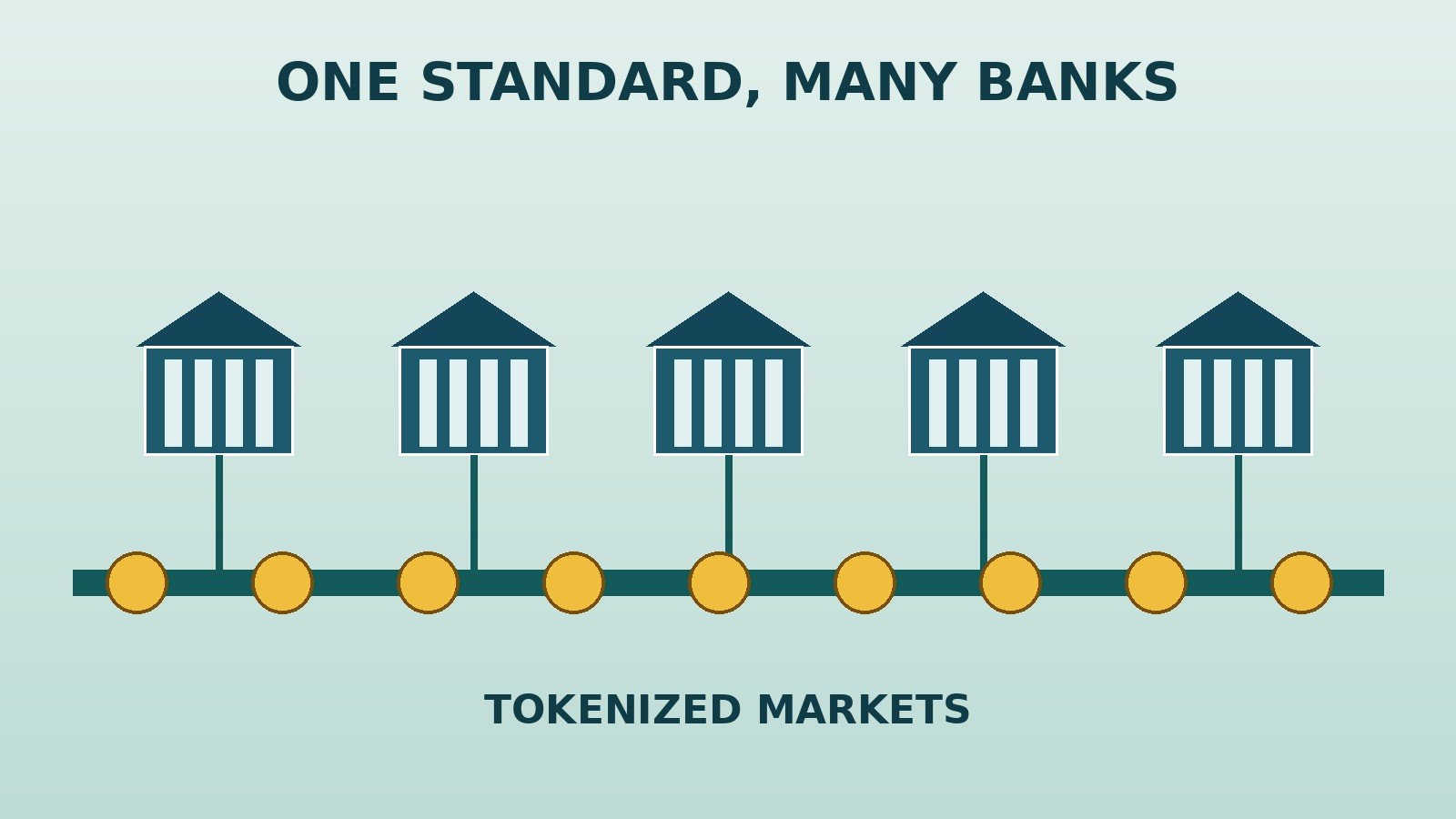
Five banks set up a standards body. HSBC, Kinexys by J.P. Morgan, MUFG Bank, Societe Generale-FORGE and Standard Chartered said Wednesday they have formed the Global Layer One Organisation, or GL1 Org, a nonprofit based in Singapore. Its job is to write and promote common standards for tokenized financial markets, so that tokenized assets and digital money can move between different banks’ systems and across borders.
GL1 Org takes over work started by the Monetary Authority of Singapore, the city-state’s central bank. That work has already produced two rulebooks: a Market Infrastructure toolkit, a set of controls for judging whether a blockchain platform is fit for regulated finance, and a Programmable Compliance toolkit, which describes how to build legal and policy rules directly into the software. “Tokenisation can help make financial markets faster, more efficient and more connected, but those benefits will only be realised if clients can trust the underlying infrastructure,” said Ruby Ho of HSBC. The group says it is open to other banks, regulators, market operators and fintech firms.
Schroders moves past cash funds. Also on Wednesday, Schroders, a London asset manager that manages about $1.1 trillion, said it is working with tokenization firm Centrifuge to bring its emerging markets bond strategy onto the Solana blockchain. It is Schroders’ first deployment on Solana. Investors hold tokenized shares in a feeder fund that invests in Schroders’ existing bond fund, with share values tracking that fund’s net asset value.
That is a step beyond what has dominated tokenization so far. Tokenized Treasuries and money market funds make up about $14 billion of the roughly $39 billion tokenized real-world asset market, according to RWA.xyz data cited by CoinDesk. Emerging markets debt carries different risks: the credit of governments and companies in developing countries, and currency swings.
Morgan Stanley uses Wall Street’s new pipe. Morgan Stanley said Tuesday it is among the first banks to tokenize U.S. stocks and Treasuries through the tokenization service run by the Depository Trust & Clearing Corporation, which clears and settles most U.S. stock and bond trades. The service went live Oct. 28. The DTCC creates tokens that stand for securities it already holds, and says they keep the same ownership rights and investor protections as the originals. It covers Russell 1000 stocks, major index ETFs and Treasuries, runs on the Canton network and DTCC’s own private blockchain, and was cleared by an SEC no-action letter in December 2025. Twenty firms have signed up, including J.P. Morgan, Citi, Bank of America, Fidelity and Citadel Securities, CoinDesk reported.
Why it matters. None of this needs the Clarity Act, the market-structure bill that stalled in the Senate in September. “The agencies have already made substantial progress without new legislation,” Peter Curley of Ondo Finance told CoinDesk. Stablecoins also have a law of their own: the GENIUS Act takes effect Jan. 18, NEAR Foundation’s Abhishek Vaidyanathan noted. The risk is durability. Lawyers told CoinDesk that agency guidance can be reversed by a future administration, and that rulemaking could slow if new commissioners arrive.
What to watch: which banks and regulators join GL1 Org, whether Schroders publishes how much money the Solana share class draws, how quickly more banks start using the DTCC service, and whether the SEC finalizes its proposed rules for tokenized securities before the new Congress starts asking questions.
Sources: GL1 Org announcement (via The Asian Banker), The Business Times, CoinDesk (Schroders), Morgan Stanley, CoinDesk (Morgan Stanley), CoinDesk (policy outlook).