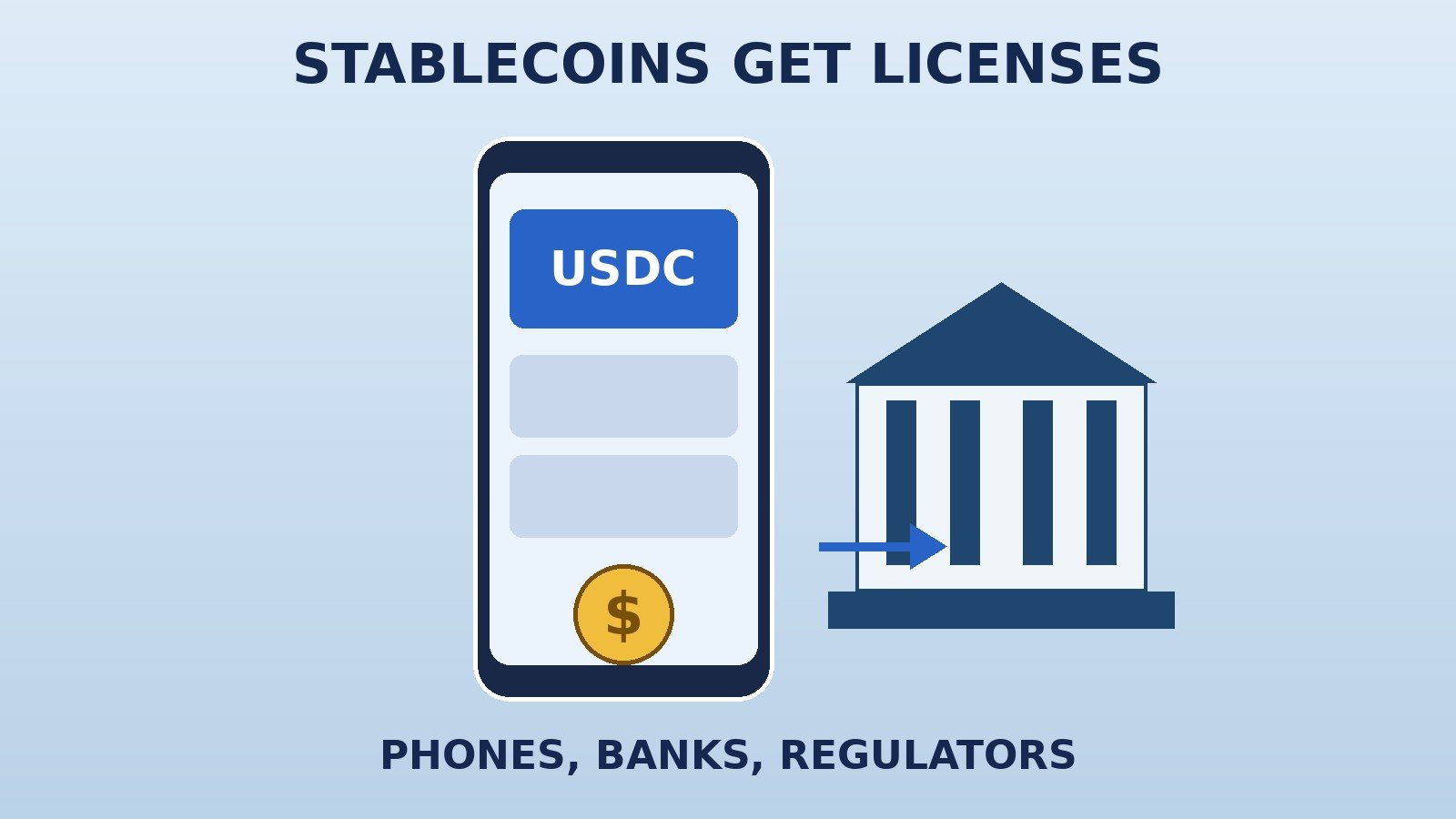
Bitcoin fell about 6% on Thursday as a tech-stock selloff spread to crypto. Away from the price screens, three pieces of plumbing moved: a phone maker opened stablecoin accounts to millions of Americans, Nigeria wrote a licensing rulebook for stablecoins, and a crypto bank asked a U.S. regulator for a dealer license.
Samsung puts USDC in the wallet app. Samsung said Thursday that its Stablecoin Account is live in Samsung Wallet for eligible U.S. Galaxy users. They can buy, hold, send and receive USDC on the Solana network without a separate crypto app or private keys. Samsung says about 82 million compatible Galaxy devices in the U.S. can use it. Solana’s own post dates the go-live to Nov. 2; Samsung first announced the feature on Oct. 7.
Samsung says it is not the custodian. Bastion, a licensed stablecoin custodian and infrastructure provider, runs the accounts, and Coinbase holds the USDC as Bastion’s sub-custodian through Coinbase Prime Vault. Users must be at least 18 with a Samsung Account and a device running Android 13 or later. New York residents are excluded. Transfers to other Samsung Wallet users or compatible outside wallets carry no Samsung fee, and users can send money to qualifying bank accounts in more than 60 countries, with fees that vary by destination. CoinMarketCap reported that credit card top-ups carry a 4% fee. Samsung says it plans to explore stablecoin payments and other markets.
Nigeria writes the rulebook. The Central Bank of Nigeria’s new virtual asset rules took effect Nov. 5. They set separate licensing categories for naira-referenced and foreign-currency-referenced stablecoins, and issuers need written approval for each token before they issue it. Foreign-currency stablecoins can be offered to Nigerians only as Class 2 tokens, issued through a Nigerian-incorporated company that holds a Foreign Currency Issuer Licence. The rules ban algorithmic stablecoins, meaning tokens that rely mainly on market dynamics rather than eligible reserve assets to hold their value. They also require customer checks, sanctions screening, transaction monitoring and the Travel Rule across custodial wallets, peer-to-peer services and remittance channels. The central bank oversees payment uses, and the Securities and Exchange Commission keeps securities activity. Existing operators have 180 days to apply, The Block reported.
Anchorage applies to be a swap dealer. On Nov. 5, Anchorage Digital Swap Dealer, LLC submitted an application to the National Futures Association for registration with the Commodity Futures Trading Commission. Anchorage said on X that its options business is “scaling past the $8B CFTC’s threshold for US based clients,” the level The Defiant described as the threshold for an exemption from swap dealer registration. If approved, it expects to offer European-style bitcoin and ether options with maturities of up to one year. Much of its growth, the company said, comes from public companies that hold bitcoin and ether and from asset managers using options to manage that exposure. The National Futures Association has not finished its review, and CEO Nathan McCauley would not give a timeline. Registration would put the business under the same Dodd-Frank dealer framework that applies to banks in interest rate, credit and currency swaps, covering capital, risk management and margin.
Why it matters. Each of these runs on rules that already exist, from a phone maker’s licensed partners to a central bank’s circular to a federal dealer regime. The Block reported that bitcoin fell 6% and ether more than 7% on Thursday, with nearly $1.1 billion in leveraged positions liquidated over 24 hours. The rails kept getting built regardless. The open questions are about use: how many people actually open a Samsung account, how many stablecoin issuers apply in Nigeria, and how long the registration review takes.
What to watch: whether Samsung adds in-store or online stablecoin payments, which Nigerian and foreign issuers apply for licenses in the next 180 days, and whether the National Futures Association approves Anchorage and on what timeline.
Sources: Samsung Mobile Press, Solana, The Block (Samsung), Bastion, CoinMarketCap, The Block (Nigeria), Anchorage Digital, The Defiant, The Block (Anchorage), The Block (markets).