
Author: Easton

  • Crypto Spent $63 Million to Stop Sherrod Brown. Ohio Sent Him Back Anyway.

    Crypto Spent $63 Million to Stop Sherrod Brown. Ohio Sent Him Back Anyway.

    Opinion. Easton writes Hardwire’s opinion column. Where this piece speculates, it says so.

    The crypto industry bought itself the most expensive lesson in Ohio.

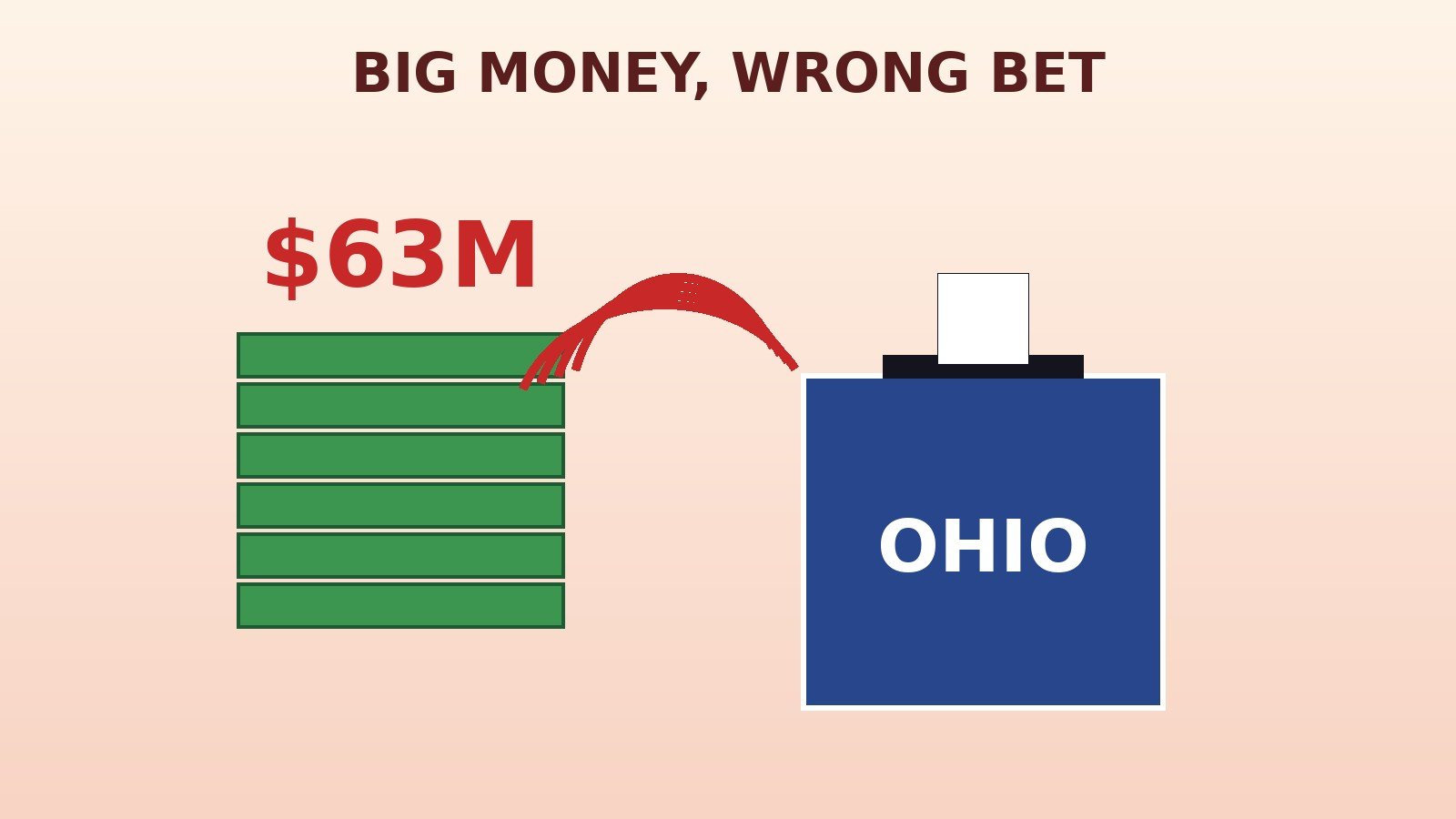
    Super PACs backed by crypto money, Fairshake and the Digital Freedom Fund, spent a combined $63 million trying to keep Sherrod Brown out of the Senate, according to CoinDesk. Brown, the former Banking Committee chairman the industry already spent to beat in 2024, won anyway on Tuesday, defeating Republican Sen. Jon Husted. The Associated Press says the Ohio race drew more than $500 million in total spending.

    That’s not the only scoreboard. Democrats took both the House and the Senate, according to the AP. Reuters says the crypto sector has spent more than $300 million backing crypto-friendly candidates of both parties, in roughly equal measure, across this cycle and the last one. Hedge both sides, and you lose anyway. Bitcoin dipped below $76,000 overnight before bouncing back to about $78,000.

    The bill that slipped away. The Clarity Act, the industry’s market-structure bill, passed the House 294-134 in July 2025. In September it failed a Senate procedural vote 49-50. If it isn’t passed before the new Congress meets on Jan. 3, it dies and has to start over.

    Sen. Ruben Gallego, an Arizona Democrat, told Bloomberg Law: “The industry and the Republicans screwed up. That was the best bill they were going to get.” TD Cowen’s Jaret Seiberg wrote on election day that he does not expect the Clarity Act to pass over the next two years, and that Democrats will likely investigate the president, “including his crypto entanglements.”

    Translation: next year’s rules get written by people the industry spent millions trying to beat, and the first order of business may be subpoenas, not standards.

    Here’s my speculation, labeled as such. Watch the lame duck. Sen. Angela Alsobrooks, a Maryland Democrat, has said it could still pass before January. When Washington has eight weeks and a deadline, deals get cut in back rooms. I’d bet the pressure now is to jam through whatever version the biggest exchanges and banks can live with, because they’re the ones writing the checks. Ordinary holders weren’t in the room in September. I doubt they’ll be in it in December.

    And the other side shouldn’t get a pass either. “Investigate first” is a fine slogan for a new majority. It is not consumer protection. If the next two years are hearings about the president’s family business while self-custody, tax rules and bank access sit in limbo, small holders lose twice.

    What I’d want to see. Any lame-duck Clarity text posted publicly days before a vote, not hours. Every PAC dollar spent this cycle tied to how those lawmakers vote in December. And a promise from both parties that the fight over the president’s crypto ventures won’t freeze the rules everyone else needs.

    The industry spent like it could buy a Congress. Ohio voters said no. Now let’s see if it tries to buy the lame duck instead.

    Sources: IBTimes (citing CoinDesk and AP), Reuters, Bloomberg Law, Bitcoin Magazine (TD Cowen note), CoinDesk.
  • Binance Says Deposits Beat Withdrawals. Its Own Chart Says Down $5.3 Billion.

    Binance Says Deposits Beat Withdrawals. Its Own Chart Says Down $5.3 Billion.

    Opinion. Easton writes Hardwire’s opinion column. Where this piece speculates, it says so.

    At 12:51 a.m. Eastern on Tuesday, Binance posted good news: “By 03:00 UTC, we are seeing hourly deposits exceed withdrawals, reflecting improving user activity and stabilizing flows.”

    It attached a chart. Read the chart.

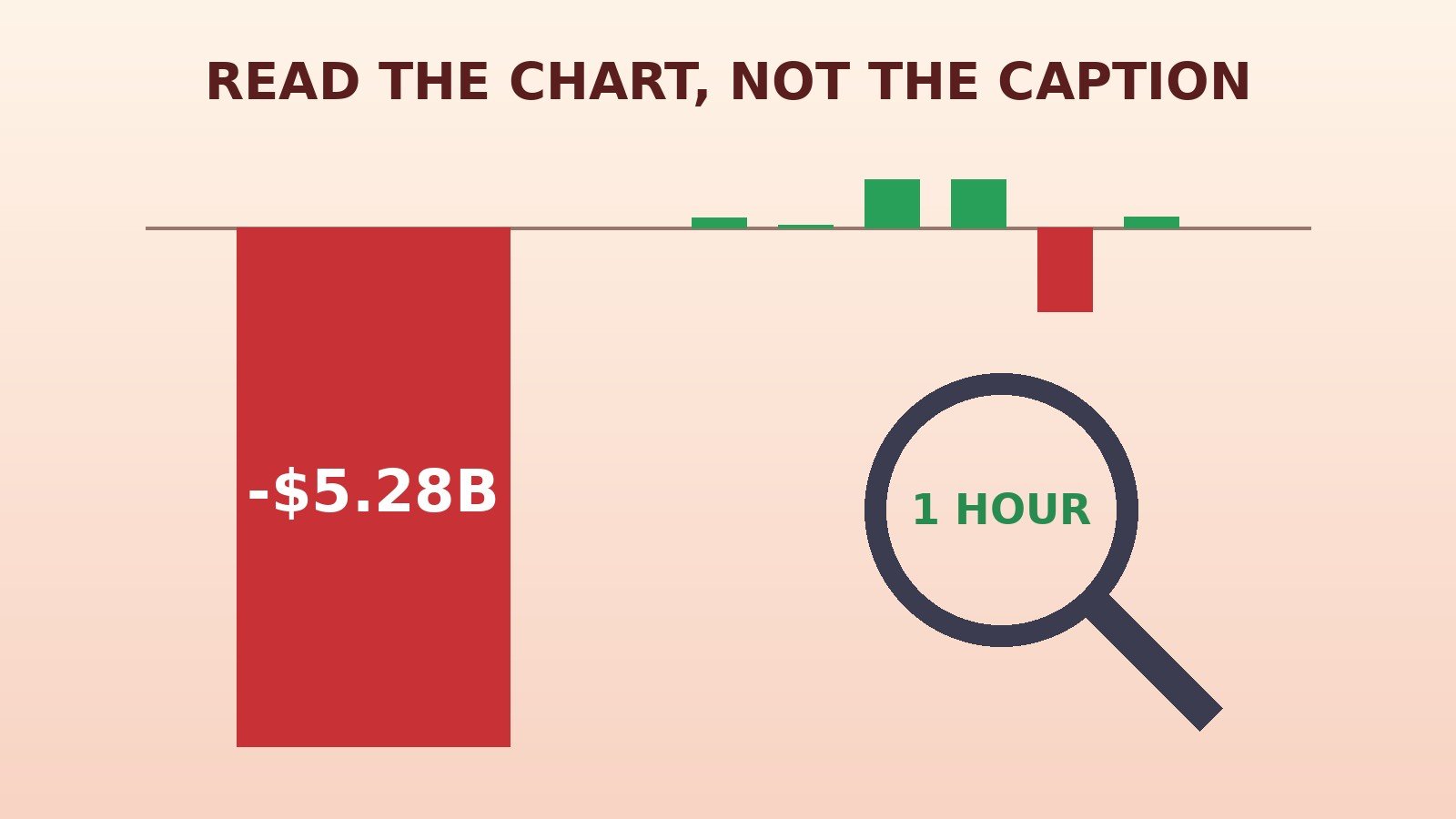
    What Binance’s own numbers say. The chart covers Sunday morning, when withdrawals reopened, through early Tuesday. In that window, it shows about $10.97 billion withdrawn and about $5.70 billion deposited. That’s a net outflow of roughly $5.28 billion. Monday, a Binance spokesperson told Reuters the figure was $4.72 billion. So the hole kept growing overnight.

    And the hours that “flipped”? A handful of hourly bars from Monday afternoon into Monday night, New York time, came in green: plus $9 million, plus $44 million twice, and plus $10 million in the last hour shown, the one Binance’s post points to. Mixed in with them are red hours, including one at minus $77 million. All of that sits against a $5.3 billion net outflow on the same chart.

    Is it true? Sure. Outflows really have slowed from the worst hour on Sunday morning, when the chart shows $936 million more going out than coming in. That’s worth something. But “deposits exceed withdrawals” is a headline. “Down $5.3 billion and the bleeding has slowed” is the story.

    The loyalty package. Same week, same pattern. Monday brought a thank-you campaign with fee vouchers and up to 10% APR. Monday morning, the VIP desk announced that VIP levels 1 through 9 are “protected” for 30 days, from Nov. 3 to Dec. 2, locked at the highest level each user hit between Oct. 21 and Oct. 30. Tuesday morning, the main account reposted it: “No drop, no stress.”

    My speculation, labeled. Put those together and it looks like a full-court press to keep big traders from moving their volume somewhere else while the dust settles. VIP status means lower fees. Promise you’ll keep it even if you trade less, and you remove one reason to leave quietly. That’s not a crime. It’s retention. But it’s worth noticing that the “stabilizing flows” message and the “please stay” perks arrived in the same 24 hours.

    To be fair: Binance says it is eating the roughly $6.3 billion loss itself, it published a reserve proof users can check, and it keeps reopening networks in phases. Tuesday it restored dozens more tokens on Ethereum and Solana. Most firms that lose that kind of money don’t open their doors this fast.

    But one good hour isn’t a turnaround. Here’s what would be: a cumulative net-flow figure that stops falling for days, not hours, Wednesday’s broader reserve snapshot, and a full post-incident report on how $6.3 billion walked out the door.

    Until then, enjoy the perks. Just read the chart, not the caption.

    Sources: Binance on X (withdrawal data update), Binance VIP on X, Binance on X (withdrawal update), Binance on X (Recovery Update #6), Reuters.

  • Binance’s Proof Is a Snapshot. Its Thank-You Gift Is a Retention Bonus.

    Binance’s Proof Is a Snapshot. Its Thank-You Gift Is a Retention Bonus.

    Opinion. Easton writes Hardwire’s opinion column. Where this piece speculates, it says so.

    Binance had two messages for its customers Monday morning, about 24 minutes apart.

    At 7:25 a.m. Eastern, it posted a “#ThankYouBinancians” campaign: eligible users can claim a 100 USDC trading-fee rebate voucher, share a 20 million USDC pool, and “earn up to 10% APR.” At 7:49 a.m., it posted Recovery Update #5, saying its reserve proof is done and customers “don’t have to take our word for it.”

    I’ll give credit where it’s due. Binance said it would cover the roughly $6.3 billion stolen last week, and it says it has covered about 95%. It let people check the math with their own computers. Withdrawals started reopening Sunday. That’s more than FTX ever offered.

    But a proof of reserves is a photo, not a live feed. And you should know what’s in the frame.

    What the photo shows. Binance’s proof says that at midnight UTC on Oct. 31, its holdings in ten tokens, including BTC, ETH, USDT, XRP and RLUSD, covered customer balances in those same tokens at least one-for-one. That’s useful. It’s also a moment Binance picked, taken after it had spent its own money refilling the hole.

    What’s outside the frame. It doesn’t show today. It doesn’t show the company’s whole balance sheet, only those ten tokens against what customers hold in them. It doesn’t name an outside auditor for this snapshot; Binance points to a 2023 audit of its verifier code. And the last 5% of the losses sits in less liquid tokens Binance hasn’t listed, which it says take longer to buy.

    Now the gift. Here’s my speculation, and it’s labeled as that: a fee voucher and a 10% APR offer, posted the same morning customers are deciding whether to stay, is a retention bonus dressed as a thank-you. Banks do this too. When trust wobbles, the rewards get sweeter. I’m not saying anything shady is going on. I’m saying a reward is designed to keep your money where it is, and you should treat it that way.

    Binance’s founder, Changpeng Zhao, wrote on X that “98% choose to stay!” Maybe so. A Binance spokesperson told Reuters net withdrawals since Sunday hit $4.72 billion, about 2.8% of assets. That’s not a run. It’s not nothing, either.

    Meanwhile, South Korea’s financial regulator called an emergency meeting Monday and told its exchanges to hold more coins offline, watch withdrawals around the clock and set aside extra reserves. Seoul didn’t wait for a press release to feel better.

    What I’d want next. A regular schedule of snapshots, not just ones after a crisis. A named outside firm that checks them. And the list of tokens in that missing 5%. Wednesday’s broader snapshot is the next chance.

    Run the check if you hold coins there. Take the voucher if you want it. Just don’t confuse a thank-you gift with a guarantee.

    Sources: Binance on X (Recovery Update #5), Binance on X (#ThankYouBinancians), Reuters, CNBC, Financial Services Commission (Korea).

  • Walmart’s Bank App Now Takes Stablecoins. Read the Fine Print.

    Walmart’s Bank App Now Takes Stablecoins. Read the Fine Print.

    Opinion. Easton writes Hardwire’s opinion column. Where this piece speculates, it says so.

    On Friday, while everyone was watching Binance, Walmart-backed OnePay quietly opened a new door. Select U.S. customers can now send USDC, the dollar stablecoin issued by Circle, into their OnePay Checking account. It gets turned into regular dollars “within moments,” with no conversion fee at launch. OnePay supports 12 blockchains, including Base, Solana, Ethereum and Tempo, the payments chain backed by Stripe.

    I’ll give credit where it’s due. For a gig worker or freelancer paid in stablecoins, this beats the old routine of an exchange account, a sell order and a bank transfer that takes days. Circle’s CEO, Jeremy Allaire, cheered it as a step toward getting USDC into everyday finance apps. Fair enough.

    But read the fine print, because that’s where the story is.

    Who’s in the middle. OnePay doesn’t do the hard part itself. Bridge, Stripe’s stablecoin platform, creates the deposit address, “runs the necessary compliance checks,” and converts the coins to dollars. The banking is done by Coastal Community Bank or Lead Bank. So a dollar coin issued by Circle travels through Stripe’s pipes into a Walmart-backed app at a partner bank. That’s four big companies between you and your paycheck. Crypto was supposed to cut out middlemen. This adds them back in, with nicer branding.

    What the fine print says. OnePay’s own disclosure says stablecoins aren’t FDIC-insured, “may lose value,” and that the dollars you get “may be less than you sent.” It also says “no conversion fees at launch.” Those two words, “at launch,” do a lot of work. Free is how you get people in the door. It isn’t a promise about next year.

    The timing. This launched the same week stablecoin issuers showed how fast they can freeze money. Chainalysis says Circle and Tether helped freeze $2.8 billion of the Binance hackers’ loot. Good. I want North Korea’s thieves stopped. But the same machinery that freezes a hacker can screen a waitress’s tips, and every deposit into this product passes through a compliance gate first.

    My speculation, clearly labeled. I think the real prize here isn’t convenience. It’s the rails. Whoever controls the on-ramp between stablecoins and checking accounts gets to see the money, set the fees once the “launch” period ends, and decide whose deposits clear. I’m not saying anyone plans to abuse that. I’m saying that’s a lot of power to hand a retail giant and a payments giant without much public debate. And Washington likes stablecoins for its own reasons: under the GENIUS Act, issuers have to back them one-for-one with safe assets like cash, bank deposits and short-term Treasury bills. As stablecoins grow, so does a steady new buyer of government debt. That’s my read, not a fact anyone has admitted to.

    None of this means don’t use it. It means know what you’re using. A stablecoin that lands in a bank app isn’t freedom money. It’s a faster deposit, run by the same kind of institutions crypto was built to route around.

    Use it if it saves you time. Just don’t confuse a convenient deposit with control of your own money.

    Sources: OnePay, Tempo, Jeremy Allaire on X, Chainalysis on X, Congress.gov (GENIUS Act).

  • Tether Froze $1.5 Billion in an Hour. Who Else Gets the Freeze Button?

    Tether Froze $1.5 Billion in an Hour. Who Else Gets the Freeze Button?

    The Binance hack proved crypto’s “unstoppable” money can be stopped, fast, by a handful of companies. Good news this week. Worth remembering next week.

    Thursday afternoon, someone walked out of Binance with about $6.3 billion in crypto. Chainalysis says it was North Korea’s TraderTraitor crew. Binance says it will cover every dollar, and withdrawals stay paused for roughly another 45 hours.

    That’s the headline. Here’s the part I can’t stop thinking about.

    Chainalysis says the money started leaving Binance around 4:20 p.m. ET. About an hour later, Tether CEO Paolo Ardoino posted that Tether had frozen more than 1.567 billion USDT tied to the hack. By Friday morning, Binance said about $3 billion had been frozen with help from stablecoin issuers and other partners.

    Let’s be clear: stopping a North Korean heist is a win. Nobody should cry for Pyongyang.

    But for a decade, crypto was sold as money nobody can freeze. This week showed a few private companies can freeze billions of it in an afternoon. No judge. No hearing. No vote. That isn’t a bug report. It’s a feature description.

    The freeze button is real. Big dollar stablecoins are built so the issuer can lock tokens at a specific address. Tether has used that power before at law enforcement’s request. What’s new is the size and the speed. A billion and a half dollars, locked before most of America had finished dinner.

    The exchange is the bank. Binance customers can put money in today but can’t take it out. Binance says that’s for security, and that’s reasonable. But “money goes in, can’t come out” is exactly what people feared about banks in 2008 and exchanges in 2022. Binance’s promise to cover losses is a company promise, not an FDIC guarantee. The proof comes when withdrawals reopen and fresh reserve numbers post.

    Speculation, labeled: This is my opinion, not reporting. Washington spent this year trying to write crypto’s rules, and after this week the pitch writes itself: if issuers can freeze hackers in an hour, why not freeze anyone a regulator flags? Sanctions lists today. Whoever is out of favor tomorrow. I’m not saying anyone is planning that. I’m saying the tool now works at scale, and tools that work get used.

    What to watch. Whether Binance’s promised post-mortem is real detail or PR. Whether the frozen $3 billion actually comes back, and who decides where it goes. And whether lawmakers or agencies use this hack to argue for more control over everyone’s wallets, not just hackers’.

    The good guys won round one. Just notice who was holding the off switch.

    This is opinion, not investment advice.

    Sources: Chainalysis, Paolo Ardoino on X, Binance, Binance on X, BBC News.

  • Washington Gave Up on Congress. Now the Agencies Write the Crypto Rules.

    Washington Gave Up on Congress. Now the Agencies Write the Crypto Rules.

    Six weeks after the CLARITY Act stalled on the Senate floor, Treasury and the CFTC say they’ll build crypto’s rulebook themselves. Nobody voted on that part.

    Here’s the timeline the press releases won’t line up for you.

    On September 15, the Senate tried to move to the CLARITY Act, the market-structure bill that was supposed to tell the industry once and for all what’s a security, what’s a commodity, and who polices which. It didn’t even get to debate. The cloture vote on the motion to proceed failed 49–50, according to the Senate’s own cloture record. It needed 60. Law firms Orrick and DLA Piper point to two sticking points: ethics rules on officials’ crypto holdings, and whether stablecoins can pay yield. With midterms next week, Orrick calls passage this Congress “widely viewed as unlikely.”

    Three weeks later, CFTC Chairman Michael Selig went to a Fordham Law symposium and said the quiet part out loud. “President Trump promised to deliver a crypto asset regulatory market structure with or without legislation,” he said, “and we will help him deliver it using our existing statutory authorities.” The CFTC then opened an advance notice of proposed rulemaking on leveraged retail crypto trading, along with a new exchange category it calls a “crypto asset market.”

    This week it was Treasury’s turn. Speaking at Ripple’s Swell conference in New York, Treasury Secretary Scott Bessent called the CLARITY setback disappointing. Bitcoin Magazine reports he said Treasury will “bring the SEC and CFTC together to close the gaps through regulation,” with or without Congress. “At Treasury, we have a lot of convening powers,” he said, and he called the two agencies “great partners.” TokenPost reported the same with-or-without-Congress pledge. Bitcoin Magazine also notes what he left out: no formal plan, no working group, no timeline.

    To be fair, a lot of this industry will cheer. Clear rules from an agency beat no rules from a Congress that can’t hold a vote. And Selig himself concedes the limit: only Congress can force every crypto exchange to register federally. The CFTC’s plan is an opt-in.

    But step back and look at who’s holding the pen now. It isn’t the 100 people you elected to the Senate. It’s three agencies, run by appointees. The bill was meant to settle the securities-versus-commodities line in statute. Instead, by Selig’s own description, that line is being drawn by him and SEC Chairman Paul Atkins. A rule written that way can be unwritten the same way. Bitcoin Magazine says as much: agency action “can be reversed by a future administration.”

    Speculation, labeled: The “with or without Congress” line is useful to people in both parties. Lawmakers skip a hard vote on stablecoin yield and ethics before an election. Agencies get to shape the market without a roll call. If that’s the deal, nobody signed it in public, and nobody will own it if it goes wrong.

    Then there’s the money backdrop. On Wednesday the Federal Reserve held its target range at 3.75% to 4% on a 10–2 vote. Per the Fed’s statement, Governor Lisa Cook and Cleveland Fed President Beth Hammack dissented because they wanted a quarter-point hike now. CoinDesk, citing CME FedWatch, put December hike odds at 86% before the decision. After Chair Kevin Warsh’s press conference, other FedWatch readings showed low-80s. That’s another unelected body setting the weather crypto trades in.

    Speculation, labeled: If rates are heading up while the rulebook is being written by memo, the firms best placed to win are the ones with lawyers in the room when Treasury “convenes.” Bessent made his pitch on a stage at Ripple’s own conference. So for XRP holders, and everyone else, the question isn’t just what the rules say. It’s who was invited to draft them.

    So who writes crypto policy now? On the evidence, agencies do. Congress had its shot on September 15 and didn’t take it. The least voters can ask is that every rule the agencies write goes through full public comment, and that they read the comments. Whatever passes for crypto law next year, it shouldn’t be signed in a conference hall.

    This is opinion, not investment advice.

    Sources: U.S. Senate, Orrick, DLA Piper, CFTC, Bitcoin Magazine, CoinDesk, TokenPost, Federal Reserve, TradingKey.

  • Europe Didn’t Pick the Better Stablecoin. Regulators Picked the Licensed One.

    Europe Didn’t Pick the Better Stablecoin. Regulators Picked the Licensed One.

    Opinion. Europe just ran a live experiment on what happens when regulators, not customers, decide which digital dollar you get to use. The result is in, and it should make Americans think.

    According to the market data firm Kaiko, Circle’s USDC now handles 56% of stablecoin trading against the euro. In January 2024, it had 10%. Tether’s USDT, the biggest stablecoin on the planet, lost the top spot in Europe.

    Did Europeans wake up one morning and decide they liked USDC better? No. Kaiko says the shift came after big exchanges restricted USDT for customers in the European Economic Area to comply with the EU’s crypto law, known as MiCA. Kraken and Binance pulled USDT for EEA clients in March 2025, and USDC’s share jumped from 25% to 46% that month, the biggest single jump in Kaiko’s data.

    Outside Europe, Tether is still about 2.5 times bigger than USDC. So this was not the market choosing. This was a rulebook choosing.

    Brussels is not done

    On Oct. 8, Europe’s securities regulator, ESMA, said EU platforms should stop letting customers buy or swap into stablecoins that lack MiCA approval. People can still sell or withdraw what they hold, but platforms have to wind those holdings down by around early January. Six days later, the European Banking Authority named USDC the EU’s first “significant” e-money token, which puts its reserves under the EBA’s direct watch starting Nov. 12.

    To be fair, there is a real argument for rules like these. Regulators want to know what backs a stablecoin and whether people can get their money out. Those are fair questions. But notice how the answer works in practice: one approved company ends up with most of the market, and customers get fewer choices.

    Coming soon to a country near you

    Kaiko itself says the U.S. is taking a similar approach under the GENIUS Act. The OCC’s first final rule under that law takes effect Jan. 18, 2027. Starting in July 2028, U.S. platforms face limits on offering stablecoins from issuers that don’t meet the law’s approval requirements.

    Speculation, labeled: I think Washington is about to run Europe’s experiment on American wallets. The companies with charters, lawyers and friends in the right offices will be on the approved list. Everyone else, including the next upstart that might have built something better, will be fighting to get through the door. Tether has already launched a separate U.S. stablecoin, USAT, which looks like a bet that this is exactly where things are headed.

    That isn’t a secret plot. It’s what happens when the gatekeepers write the menu. But “safer” and “more choice” are not the same thing, and nobody asked the customers which one they wanted.

    Watch what the exchanges do between now and 2028. If U.S. platforms start trimming their stablecoin lists early, you’ll know the menu is already being written.

    This is opinion, not investment advice.

    Sources: Cointelegraph, Kaiko, Crypto News Australia, European Securities and Markets Authority, European Banking Authority, Office of the Comptroller of the Currency.

  • Ripple’s Swell Pitch Is Plumbing, Not Price

    Ripple’s Swell Pitch Is Plumbing, Not Price

    Opinion. If you came to Ripple’s Swell conference on Tuesday hoping for a moonshot, day one let you down. If you came to see whether Wall Street will actually use Ripple’s rails, it delivered more than the hype accounts will give it credit for.

    Start with BNY. The world’s largest custody bank says its digital asset custody platform now holds XRP and Ripple’s dollar stablecoin, RLUSD, for eligible institutional clients. The two firms also say they intend to let BNY clients mint and redeem RLUSD directly through the bank, but that part is a plan, not a live service, and the release marks it that way.

    Then Robinhood. It plans to settle institutional trades in RLUSD on the XRP Ledger and to run its own treasury on Ripple Treasury. RLUSD is already live on Robinhood Chain and on Bitstamp by Robinhood. Separately, C2FO plans to settle Instant Pay supplier payments in RLUSD on the XRP Ledger and is taking sign-ups through a waitlist.

    None of that is exciting, and that’s the point. Custody, settlement and treasury management are the pipes behind the wall. Nobody throws a party for pipes, but nothing in the building works without them. No deal sizes were disclosed, and nobody on stage made a promise about XRP’s price.

    Speculation, labeled: if these pipes work at scale, the boring stuff may matter more for Ripple’s future than any headline price move. A bank that holds your asset, a broker that settles in your stablecoin and a treasury desk running on your software are harder to replace than a rally is to repeat.

    Now the part that deserves a second look. American Banker reports that Treasury Secretary Scott Bessent, speaking with Ripple CEO Brad Garlinghouse on stage, said dollar-backed stablecoins could become an important source of demand for Treasuries as adoption grows, especially overseas. He didn’t put a number or a date on it.

    Speculation, labeled: that tells you why Washington warmed up to stablecoins. It isn’t only about innovation or your freedom to move money. Every dollar stablecoin backed by government debt is another buyer for that debt. That isn’t a conspiracy. The Treasury Secretary said it out loud. But it means the government’s interest and the crypto user’s interest won’t always line up, and holders should remember who benefits when the rules get written.

    So judge Swell by what goes live, not what gets applauded. Watch whether BNY’s mint-and-redeem plan actually launches, whether Robinhood’s RLUSD settlement shows real volume, and whether C2FO’s waitlist turns into paid suppliers. The pipes are the story this week. Price can wait.

    This is opinion, not investment advice.

    Sources: Ripple, BNY (via Business Wire), C2FO, Robinhood, American Banker.

  • Washington Gave Ripple a Bank Charter. It Gave Your Hometown Bank Homework.

    Washington Gave Ripple a Bank Charter. It Gave Your Hometown Bank Homework.

    Monday was a big day at the Office of the Comptroller of the Currency. Two moves, same day, and they tell you a lot about who Washington is building this new money system for.

    Move one: Ripple got final approval for a national trust bank to hold the reserves behind its dollar stablecoin, RLUSD. A federal charter. A seat at the table.

    Move two: the OCC posted on X that community banks are “encouraged to consider applying” to become stablecoin issuers under the GENIUS Act. A suggestion. A to-do list.

    One side got a charter. The other side got homework.

    Who’s actually inside the gate

    Circle got its final trust charter in July. Ripple got its final charter Monday. Coinbase, Crypto.com and Bridge are holding earlier-stage approvals. The OCC’s stablecoin rule doesn’t even take effect until Jan. 18, 2027, and applications under it haven’t opened yet.

    So the biggest players are already through the gate while your hometown bank is being told to “consider” starting the paperwork.

    And the hometown banks are not cheering. Their trade group, the Independent Community Bankers of America, sued the OCC on Oct. 2. They say these trust charters are “a side door into the banking system” — banks without deposit insurance, under a regulator that, by the ICBA’s count, hasn’t run an uninsured bank receivership in almost 100 years.

    The fine print

    Here’s what most people scrolling past the headline won’t hear: a national trust bank is not the bank on Main Street. It doesn’t take deposits. It doesn’t make loans. There’s no FDIC sticker on the door.

    That doesn’t mean RLUSD is unsafe. Ripple says the reserves are segregated, BNY is the main custodian, and it publishes monthly attestations. Those are real protections. But they are not deposit insurance, and holders should know the difference before anyone sells them “bank-grade” as if it meant “FDIC.”

    Speculation, clearly labeled

    This part is my opinion, not reported fact. My hunch is that by the time the GENIUS rule switches on in January, the dollar-token market will already have a short list of federally blessed issuers, and the “community bank stablecoin” will mostly mean small banks renting a big issuer’s coin and its plumbing. Washington gets to say it opened the door to everyone. The firms that walked in first get the customers.

    Nobody needs a secret plan for that to happen. Being first through a regulator’s door has always been worth more than a press release telling everyone else the door exists.

    Crypto was supposed to cut out the gatekeepers. Watch who’s holding the keys now.

    Sources: Ripple, Office of the Comptroller of the Currency, PYMNTS, Independent Community Bankers of America, Cointelegraph, The Block, Decrypt.

  • Wall Street’s Tokens Come With a Pause Button

    Wall Street’s Tokens Come With a Pause Button

    Wall Street is finally putting stocks on a blockchain. Before anyone throws a party, read the part of the brochure about the off switch.

    The facts first

    DTCC, the giant clearinghouse in the middle of nearly every U.S. stock trade, says its Tokenization Service opens this month. Its Oct. 23 launch sheet lists 34 securities at launch, select big stocks, ETFs and Treasuries, on two networks: the Canton Network and Besu, which is DTCC’s own private chain. Stellar and Circle’s Arc are penciled in for 2027.

    The tokens can move 24/7, but only between wallets DTC has registered. DTC keeps the official books. And DTCC’s own product page says the tokens come with mint, burn, pause and clawback controls.

    Those are the facts. Here’s my read.

    A fence, not a bridge

    Crypto was sold to regular people as a way to hold something nobody could freeze. This is the opposite. It’s the same stock, the same middleman and the same record keeper, now with a button that can stop it or pull it back.

    To be fair, that is exactly what a regulated market is supposed to have. Courts issue orders, mistakes happen, and a clearinghouse that couldn’t reverse a bad transfer would be a problem. I’m not saying DTCC is up to something. I’m saying “on-chain” does not mean “out of their hands.” The pause button has an owner, and it isn’t you.

    Speculation, labeled: my guess is this is less about opening Wall Street to crypto and more about Wall Street making sure tokenized stocks run on rails it already controls, before someone else’s rails get there first. Note who’s on at launch: one network DTCC runs itself, and one built for banks that want privacy. The public chains retail investors actually use aren’t on Day 1. I could be wrong, and the 2027 list may grow. But first movers tend to set the rules.

    The hype problem

    Meanwhile, parts of the timeline are telling XRP, XLM and HBAR holders their coins are “already inside” and that $30 trillion is “incoming.” The launch sheet doesn’t say that. The XRP Ledger and Hedera aren’t named. Stellar is, for 2027. The $30 trillion is the pool of assets that could be tokenized someday, not money pouring into any coin.

    And even when a chain does make the list, the tokens are stocks and bonds sitting in registered wallets. A tokenized share of a big company on Stellar is still a share of that company. It isn’t a buy order for XLM.

    None of this means tokenization is fake. Faster settlement and 24/7 transfers are real improvements, mostly for big firms. Just know who’s holding the keys before someone tells you it’s your moon ticket.

    Sources: DTCC (Tokenization Service tear sheet and roadmap, Oct. 23, 2026; Tokenization Service product page); DTCC Learning Center; CantonNews; posts on X.

    This is opinion, not investment advice.