
On Monday the Commodity Futures Trading Commission published an advance notice of proposed rulemaking (ANPRM). It lays out how the agency plans to regulate retail crypto trades made on a margined, leveraged or financed basis, and a new kind of federally registered venue to host them.
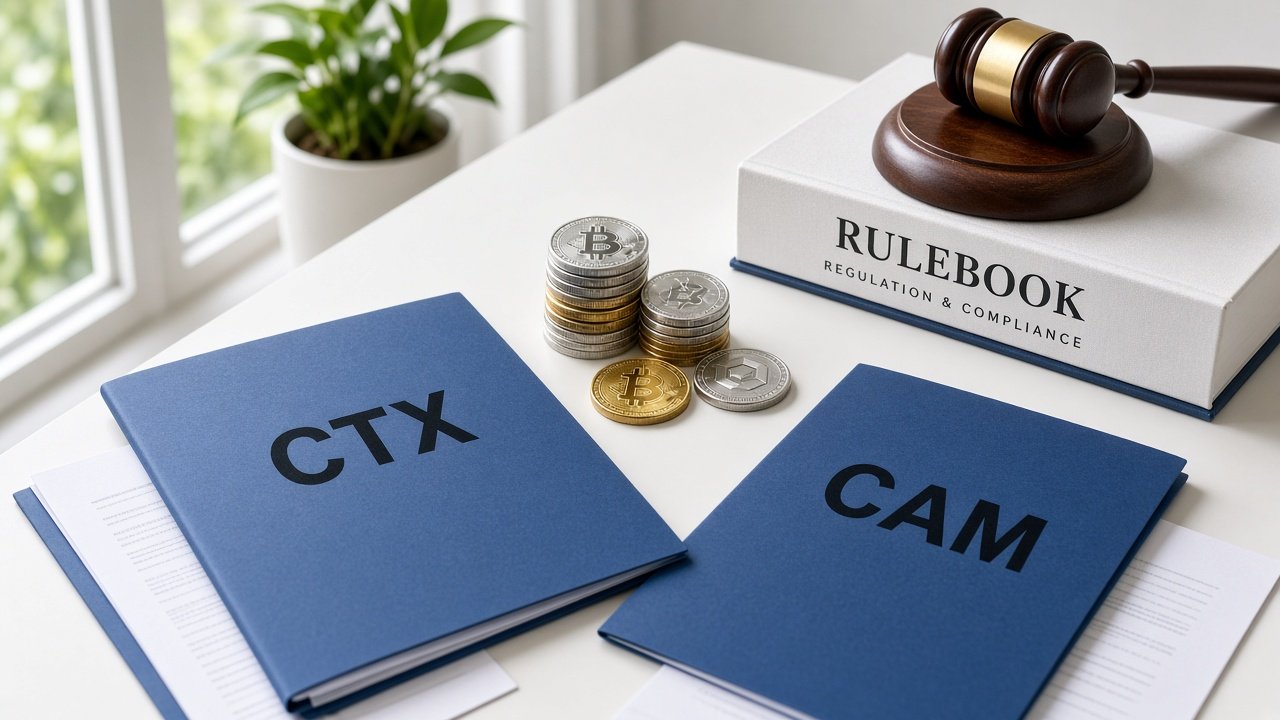
The 108-page notice has two parts. Regulation Crypto Asset Transactions (Regulation CTX) would define and govern those retail trades, which the agency calls “CTXs,” under section 2(c)(2)(D) of the Commodity Exchange Act. Regulation Crypto Asset Markets (Regulation CAM) would create the “crypto asset market,” or CAM. A CAM is a sub-category of designated contract market (DCM) built only for CTXs.
An ANPRM is not a proposed rule. The CFTC says it will use the comments “to inform potential future agency action, such as a rulemaking.” Comments are due 60 days after the notice is published in the Federal Register. The version posted Monday still has a placeholder for that date.
Option, not mandate
Chairman Michael Selig stressed that the framework is voluntary. “I want to underscore that this is a federal option for crypto asset exchanges,” he said in prepared remarks at Fordham Law’s Blockchain Regulatory Symposium. He compared it to the choice banks have between a state and a federal charter. “Only Congress has the authority to mandate that all crypto asset exchanges register with the Commission.”
He made the same point in a Wall Street Journal op-ed posted on the CFTC’s website. Unlike the stalled Clarity Act, he wrote, the rules “wouldn’t require crypto assets to trade on CFTC-registered platforms. We don’t have the authority to impose such a requirement without congressional action.”
Selig described the market as a three-rung ladder:
- Ordinary spot exchanges stay mostly under state money-transmission laws, with the CFTC policing fraud and manipulation.
- Exchanges that offer retail customers margin, leverage or financing must register with the CFTC. This is the rung Monday’s notice covers.
- Exchanges that list perpetuals and other derivatives already have to register.
Existing DCMs could add CTXs under tailored rules. Firms that only want to offer CTXs could register as a full DCM or as a CAM.
What the rails would look like
According to Selig and the notice, CAMs would follow the statutory DCM core principles, with rules written for crypto. Before listing a token, an exchange might weigh how it was distributed and how concentrated holdings are, lock-ups and vesting, and any programmatic issuance or buybacks.
Retail CTXs would go through futures commission merchants (FCMs). That brings customer-fund segregation, capital requirements and Bank Secrecy Act anti-money-laundering duties. Financing could come only from an FCM or from a qualified bank sponsored by an FCM.
Selig said the framework “contemplates a ‘proof-of-reserves’ obligation” for exchanges that hold customer assets in omnibus accounts. At this stage, the notice itself asks for comment on proof-of-reserves practices rather than setting a requirement.
The agency also gave a preliminary reading of the statute’s 28-day “actual delivery” exception. Delivering an asset to a user’s own non-custodial wallet within 28 days would generally qualify, which keeps those trades off-exchange.
The plan builds on a joint CFTC-SEC interpretation from earlier this year. Selig’s speech says it named bitcoin, ether, XRP, XLM and SOL, among others, as examples of digital commodities.
The limits
The plan does not close the spot-market gap. CoinDesk noted that for unleveraged spot trading of assets like bitcoin and ether, the CFTC’s authority still stops at fraud and manipulation.
How long the framework lasts is another open question. CoinDesk reported that Selig has been the CFTC’s only commissioner for nearly a year. He acknowledged the limits himself: “We haven’t solved every problem, nor can agency action substitute indefinitely for a statutory framework passed by Congress, but we must do what we can.”
Sources: CFTC press release 9307-26; CFTC ANPRM on Regulation CTX and Regulation CAM; Chairman Selig’s Fordham remarks; Selig op-ed / statement; CoinDesk