It is an exploration, not a launch, but it puts a regulated dollar stablecoin inside one of the most conservative payment pipelines in finance.
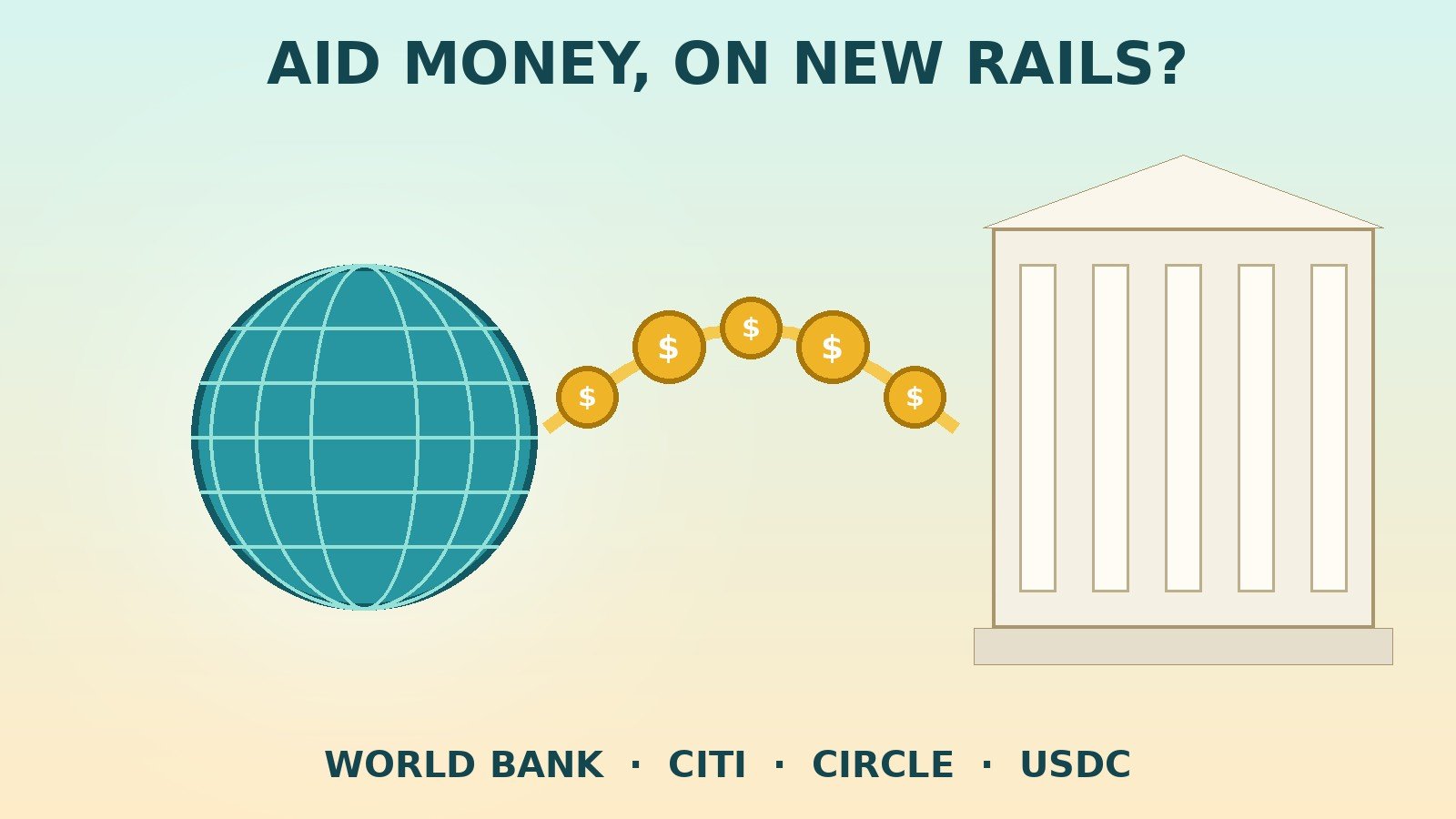
The World Bank Group said on Tuesday that it will explore whether regulated U.S. dollar stablecoins can move its development money faster and more cheaply, working with Citi and Circle, the issuer of USDC.
According to the World Bank’s announcement, the work will test how stablecoins and blockchain payment rails “could work alongside or improve” the group’s current disbursement setup, which runs through correspondent banks. Citi brings its existing connections to traditional banking rails. Circle’s infrastructure would “mint and settle funds in USDC.”
What it is, and what it isn’t
This is a study, not a switch. The World Bank gave no timeline, no dollar amounts and no list of pilot countries. It said the first phase will focus on an “intermediated and interoperable” model, meaning banks stay in the middle, and that it will engage only borrower countries “where the use of digital assets is supported and permitted.” It added that it may bring in other banks later.
The project builds on FundsChain, a World Bank ledger that already tracks how money is spent on more than 350 projects in 96 countries. In other words, the group is not starting from scratch on blockchain record-keeping. What’s new is the possibility of the money itself moving on-chain.
Why it matters
The World Bank Group committed $123.5 billion in loans, grants, equity and guarantees in its fiscal year that ended in June, according to its 2026 annual report. The World Bank itself is owned by 189 member countries. Even small savings on the cost and speed of moving that money add up, which is the case World Bank President Ajay Banga made: faster payments mean “a health clinic gets built on time, a farmer gets paid before the harvest season ends.”
For cautious readers, the structure is the point. This is a regulated dollar stablecoin, routed through a global bank, under an institution whose job is to avoid losing other people’s money. It sits in the same lane as bank tokenized deposits rather than speculative tokens.
The same day, Circle also said it is expanding USDC in Asia Pacific with DBS Bank, offering eligible institutional clients direct issuance and redemption and 24/7 USD-to-USDC settlement.
What to watch
Key details are still missing: which countries take part first, how funds convert back to local currency, and who carries compliance at each step. Until the World Bank publishes those, treat this as a signal of direction, not a change in how aid moves today.
Sources: World Bank, World Bank Group Annual Report 2026, Circle, The Block, Decrypt