Opinion. The views here are Easton’s own. Speculation is labeled as speculation.
On Tuesday the World Bank Group said it will explore sending development money in USDC, with Citi and Circle doing the plumbing. Crypto Twitter called it a partnership to “send money worldwide.” The release itself calls it an exploration. No timeline. No amounts. No pilot countries.
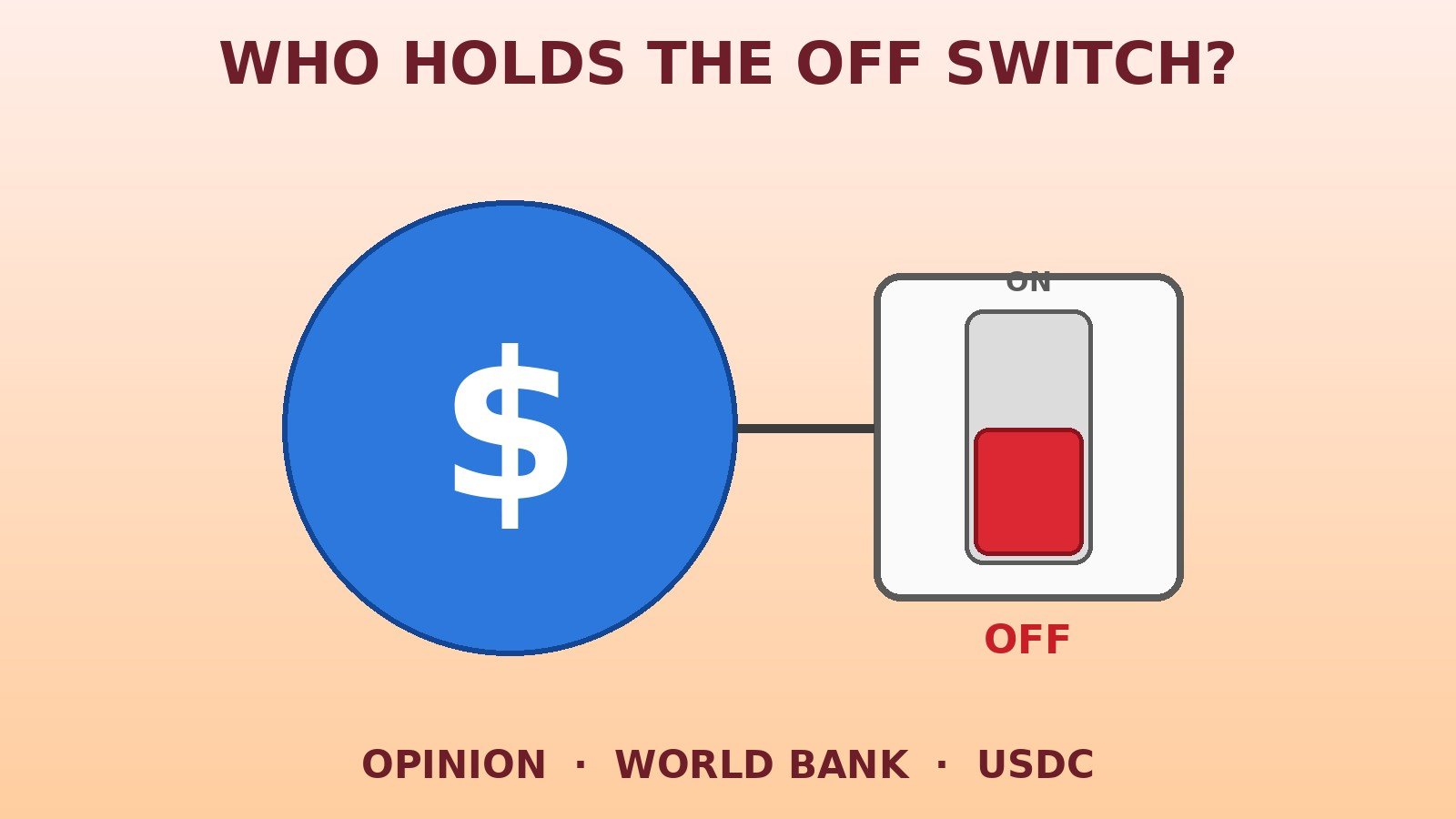
Fine. Let’s read what it does say, and ask the question nobody in the press release asked: who holds the off switch?
The fair point first
Moving aid through correspondent banks is slow and costly. Every hop takes a fee and a day. World Bank President Ajay Banga says faster money means “a farmer gets paid before the harvest season ends.” That is a real goal, and if a dollar token gets cash to a clinic faster, good. The World Bank is also keeping banks in the middle and only working in countries where digital assets are allowed. That’s caution, not recklessness.
The off switch
Here’s what the fine print doesn’t stress. USDC is not cash. It is a token issued by one private American company. Circle’s own terms let it block addresses and freeze the coins in them, and it has done it before, including after the U.S. Treasury sanctioned Tornado Cash in 2022. Usually that’s framed as a safety feature. Maybe it is.
But think about what it means here. Money meant for a borrower country would sit on a rail where a company in the United States, answering to U.S. law, can stop it mid-flight. Not the borrower’s central bank. Not the borrower’s courts. Washington’s rules, enforced by a ticker symbol.
Follow the reserves
Circle says USDC is backed by cash and short-term U.S. Treasuries. So every aid dollar that moves as USDC is, under the hood, a dollar parked in American government debt.
My speculation, and it’s only that: this is less about helping farmers and more about exporting the dollar. A private stablecoin does what a Fed digital dollar never could get past Congress. It spreads dollar rails into the developing world, adds quiet demand for Treasury bills, and keeps a freeze button in American hands. Nobody has to say that out loud for it to be true in practice.
Sound money, or just faster money?
I’m not against faster payments. I’m against confusing speed with freedom. Bitcoin was built so no one could freeze your money. USDC was built so someone always can. Both have uses. But when the world’s biggest development lender picks the one with the off switch, people should notice who it’s really built for.
Watch the details when they come: which countries go first, who can freeze what, and whether borrowers get any say over the rails their money runs on.
Sources: World Bank, Circle USDC Terms, Circle Transparency, Watcher Guru, The Block