Thailand’s securities regulator wants to put a daily limit on how much stablecoin you can move. On paper it’s about money laundering. Read the fine print and it looks more like a fence around the country’s money, with a gate for insiders.
What the rule says
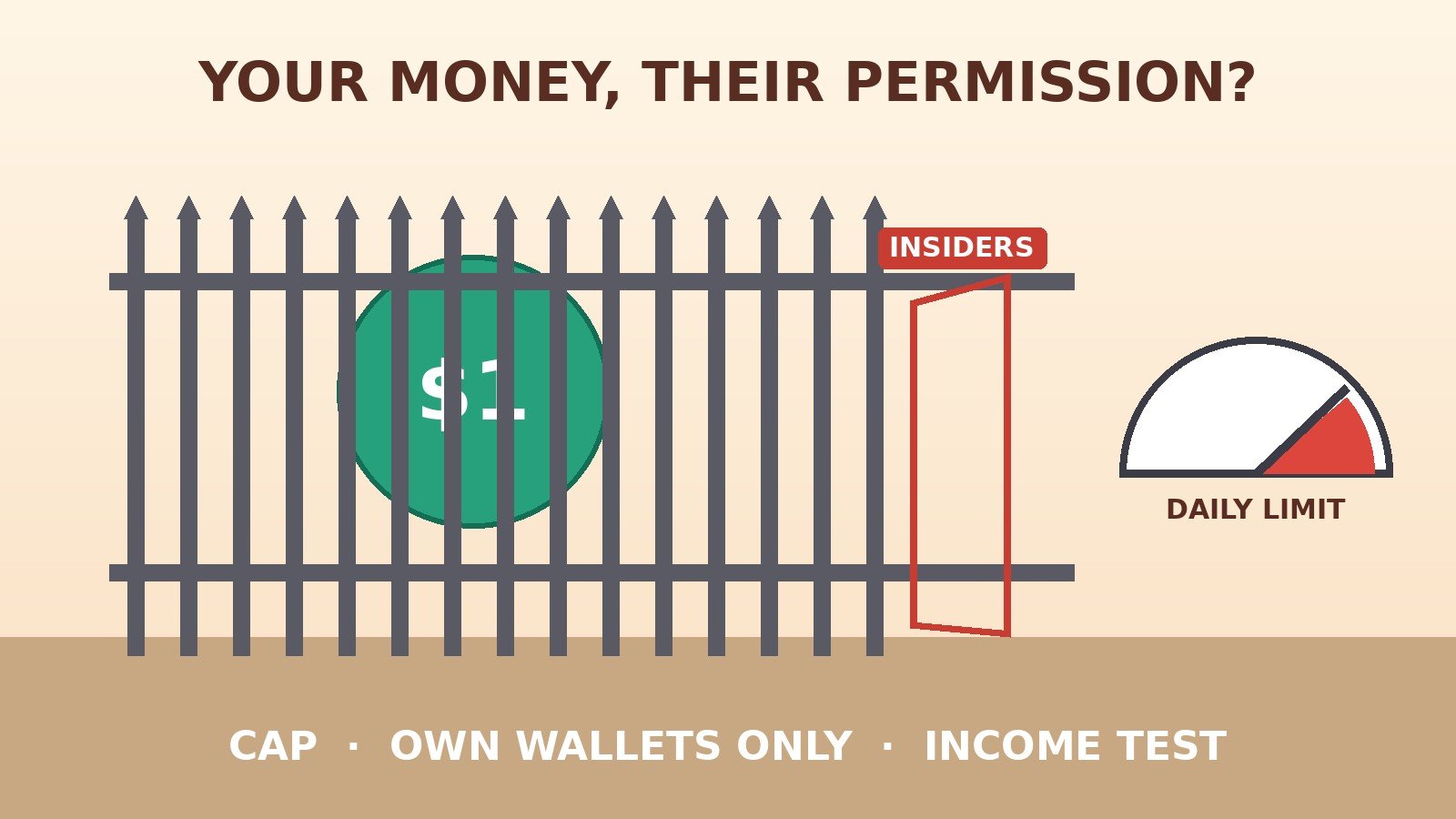
On Nov. 12, Thailand’s Securities and Exchange Commission opened comments on a draft rule for stablecoins at licensed crypto platforms. Deposits and withdrawals would each be capped at 5 million baht, about $148,000, per customer, per day, at each platform. You could only move stablecoins to and from wallets verified as your own. Sending to a friend, a business or anyone else would be banned on the regulated rails.
Then comes the line that matters most. The regulator said the value of stablecoins moving in and out of an account “must be commensurate with the customer’s source of income and financial position.” Platforms would also have to run Travel Rule checks and blockchain analytics on every wallet. Comments close Nov. 26.
Who gets a pass
Look at who is exempt from the cap. The platforms themselves, moving coins for business. Market makers. Firms with case-by-case approval from the Bank of Thailand. Token offerings run through approved portals. And customers moving coins between their own accounts at two licensed Thai platforms.
That last one tells you where the limit actually bites. Moving money around inside Thailand’s licensed system is fine. Moving it out, to an offshore exchange or a wallet you control yourself, is what gets counted and capped. The regulator even lists one of its goals as stopping people from “circumventing” international money-transfer rules. That isn’t anti-crime language. That’s capital-control language.
The fair point
Southeast Asia has a real scam-and-laundering problem, and Thai regulators say stablecoins are part of it. A cap and a same-owner rule will make life harder for money mules. Few ordinary savers move $148,000 a day. The draft also doesn’t touch purely peer-to-peer transfers that never hit a registered platform, The Block noted.
But the income test isn’t about whales. It means a platform decides whether your money “fits” your paycheck before you can move it. That is permission-based money, and it’s the opposite of why people wanted crypto in the first place.
Why Americans should care
Washington just walked back its plan to drop the Travel Rule threshold to $250. That was a win, and we said so. Templates travel, though. Brazil’s central bank floated a 24-hour hold on large stablecoin transfers to self-custody earlier this year, according to Stablecoin Insider. Now Thailand wants a hard cap and an income test.
My speculation: the next step is international, not national. Phrases like “commensurate with income” have a way of showing up in global anti-money-laundering guidance and then landing in U.S. rulebooks as a “best practice” nobody voted on. And the banks lining up to issue their own stablecoins would not mind a world where moving your coins to your own wallet takes paperwork. That’s speculation, labeled. Nobody has proposed it here.
So watch the language, not just the dollar figure. A cap can be raised. An income test, once accepted, tends to stick around and get applied to everyone.
Sources: The Block, Stablecoin Insider, Siam Blockchain, Hardwire (Nov. 7), Hardwire (Nov. 11).