
Opinion. Easton writes Hardwire’s opinion desk. Speculation is labeled as such.
Crypto’s oldest rule is four words long: not your keys, not your coins. On Wednesday, Germany’s biggest bank opened a business built on the opposite idea.
Deutsche Bank’s new custody service is live for paying institutional clients. The bank manages the wallets and the private keys. Clients get bitcoin, ether and a few stablecoins held for them by a name they already know.
A day earlier, Bloomberg reported that Deutsche Bank, Goldman Sachs, Citigroup, Santander and others had put about $270 million behind a joint company that plans to issue its own dollar stablecoin in 2027. Twenty-one institutions signed up in September, including Bank of America, Wells Fargo and UBS.
So in the same week, the banks moved to hold the coins and to mint the money. That is worth a closer look.
Credit where it’s due. For a pension fund or a company treasury, this is progress. Last month, hackers hit Binance for about $6.3 billion. Institutions have every reason to want a regulated custodian with cold storage, more than one person approving each transfer, and a national regulator looking over its shoulder. Deutsche Bank is also honest in its own fine print: crypto held with it is not covered by a deposit guarantee like a bank account is. Good. Say it loud.
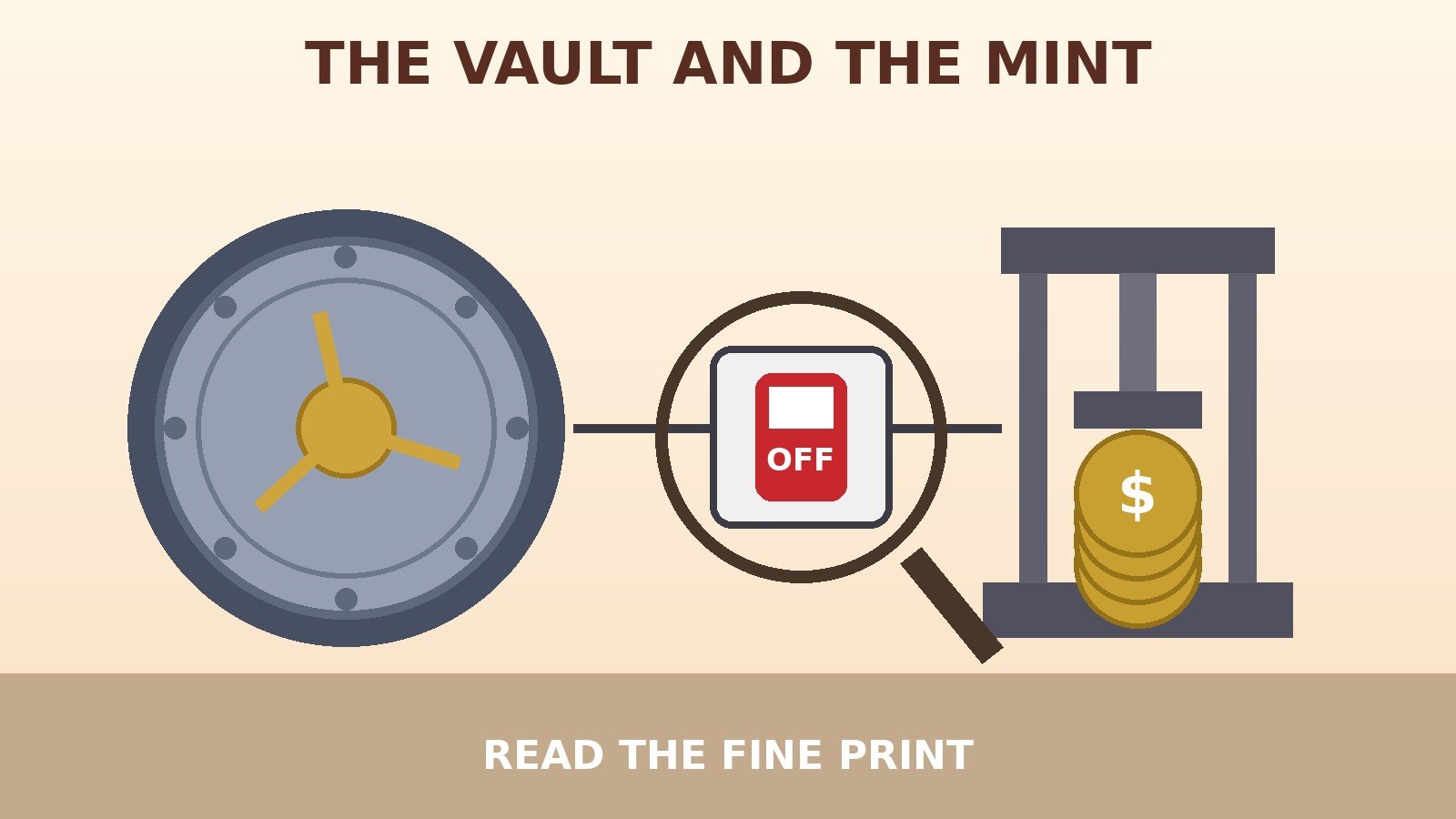
But follow the switches. When a bank holds your keys, the bank’s rules decide when your coins can move. And the stablecoin side has a switch built in by law. The GENIUS Act requires a licensed stablecoin issuer to have the technical ability to seize, freeze or burn coins when it gets a lawful order. Lawmakers wanted that to fight crime, and that’s fair. But a dollar coin issued by 21 of the institutions that already run the payment system will come with a freeze button attached.
My speculation: the pitch for crypto was money that moves without asking permission. What’s being built here is money that moves faster, but still asks. Some of the same banks that spent years keeping crypto at arm’s length now want to be the vault and the mint. I don’t think that’s a plot. I think it’s business. Banks hate losing the toll booth, and stablecoins were threatening the toll booth.
My speculation, part two: the regular saver will meet this later, through a bank app or a fund, and it will feel safe. Many people will be glad of it. But a coin your bank can freeze, held in a vault your bank controls, is a bank account with better branding.
What I’d want to see. Before the bank stablecoin launches, publish who holds the reserves and where. Publish the rules for a freeze, who signs off, and how a customer appeals. Tell us which blockchain it will run on and whether ordinary wallets can hold it. And for custody, tell clients plainly what happens to their coins if the custodian is ever in trouble.
Holding your own keys isn’t for everyone. Fine. But “trust us” was the system crypto was built to question. Before we hand the keys back, let’s read the rulebook.
Sources: Reuters, Deutsche Bank, The Block, Bloomberg, Banco Santander (consortium release), Congress.gov (GENIUS Act text), Hardwire (Westen’s report).