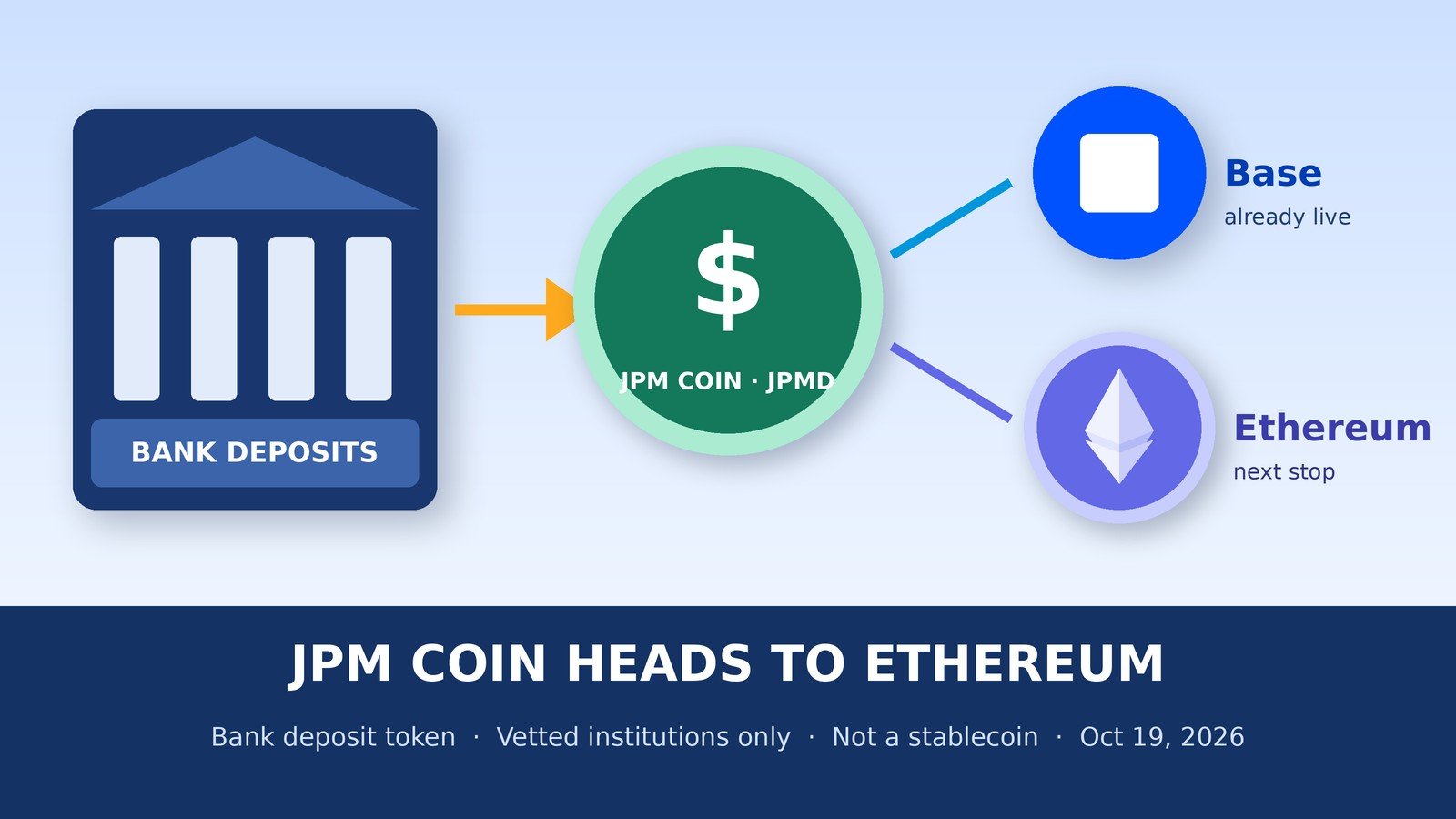
JPMorgan is taking JPM Coin, its token for dollar deposits at the bank, onto Ethereum. Kinexys, the bank’s blockchain unit, said in a Monday statement shared with The Block that the token, known as JPMD, now supports peer-to-peer transfers across the Ethereum ecosystem, including Ethereum itself and Base, the Coinbase-built network where it launched.
The token is for approved institutional clients only. It is not something retail users can buy, and it is not listed on exchanges.
What JPM Coin is
JPM Coin is a deposit token. Each one represents U.S. dollars sitting in an account at JPMorgan. The bank’s own FAQ says it is “not a cryptocurrency or a stablecoin,” and that clients’ funds “never leave the firm’s regulated banking infrastructure.” Clients move between cash and tokens through accounts at the bank, and only vetted counterparties can transact.
That is the key difference from a stablecoin like USDC. A stablecoin is issued by a company that holds reserves. JPM Coin is a claim on a bank deposit at the largest U.S. bank, with JPMorgan controlling who can hold it.
JPMorgan first tested the token on Base in mid-2025 and made it available to institutional clients there in November 2025.
Why Ethereum, and what’s still unclear
Kinexys said Ethereum’s “established depth of onchain liquidity and tokenized assets” made it the natural next network. Emma Landriault, global head of Kinexys Labs, told Bloomberg the bank wants to serve crypto firms making blockchain payments and financial firms that need a token to settle trades or back tokenized assets, according to CoinDesk’s summary of that interview.
One detail is not settled in public yet. CoinDesk, citing Bloomberg, reported that Landriault did not say when JPM Coin would become available on Ethereum. As of Monday morning, JPMorgan’s JPM Coin web page still described the token as issued on Base. Clients should confirm timing and the official token details with the bank directly.
The bigger picture
JPMorgan said Kinexys has handled more than $4 trillion in transactions since launch and averages about $7 billion a day. That is still a small slice of the bank’s overall payments business. The bank has also launched tokenized money market funds on Ethereum, the first in December 2025 and a second in May 2026, and said in January it planned to take JPM Coin to the Canton Network as well.
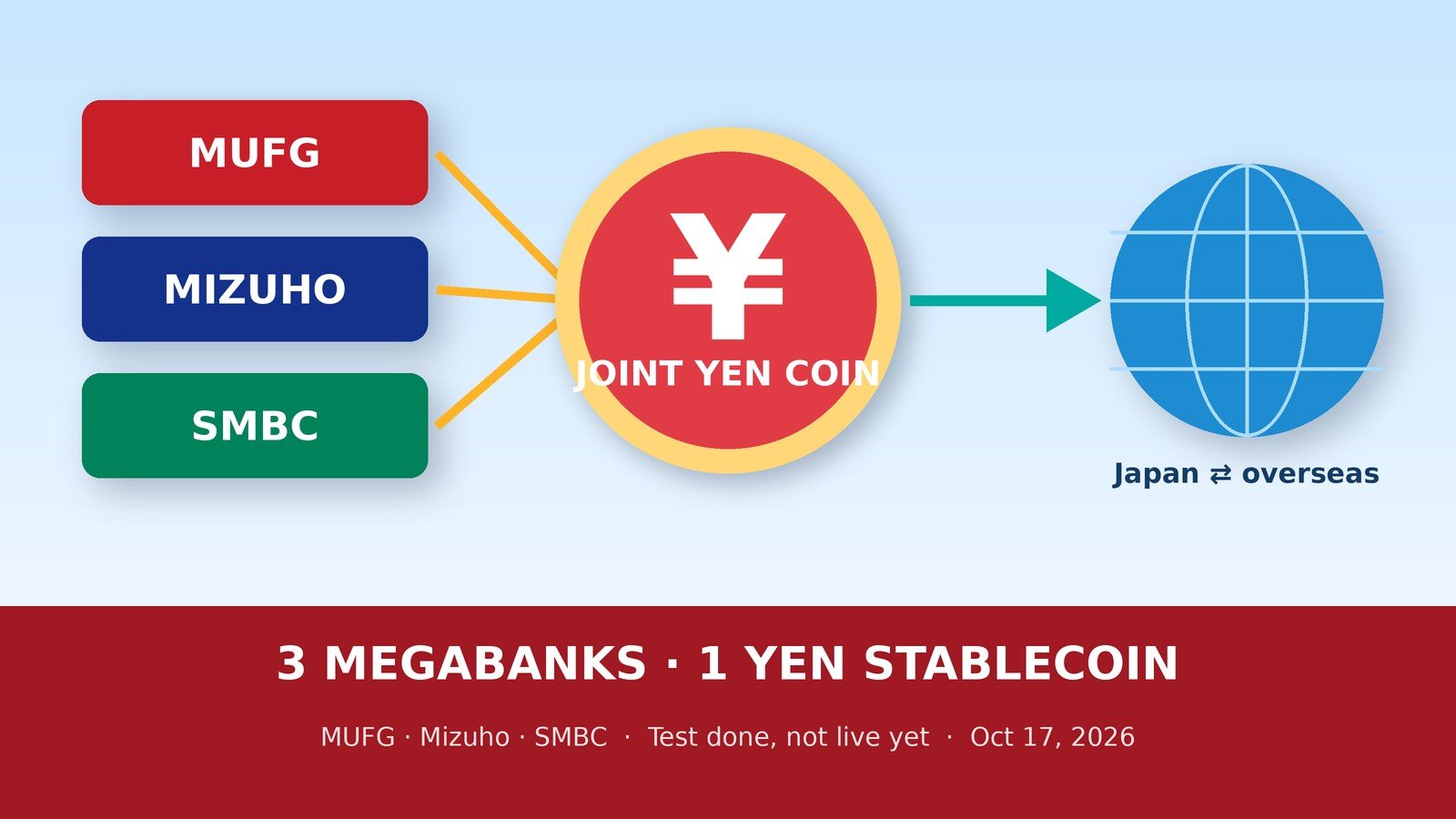
The move adds to a busy month for bank tokenization. Japan’s three megabanks reported a joint yen stablecoin test, and a U.S. bank, Cross River, added Ripple’s RLUSD to its core banking system. The pattern is the same: big banks are putting regulated money on public blockchains, while keeping control over who gets to use it.
A safety note: JPM Coin is not sold to the public. Any token calling itself “JPM Coin” on a public trading app or decentralized exchange should be treated as suspect.
Sources: The Block; CoinDesk; J.P. Morgan Kinexys; J.P. Morgan Payments; TokenPost