Category: Policy

  • CFTC Opens a Federal Lane for Leveraged Retail Crypto, as an Option and Not a Mandate

    CFTC Opens a Federal Lane for Leveraged Retail Crypto, as an Option and Not a Mandate

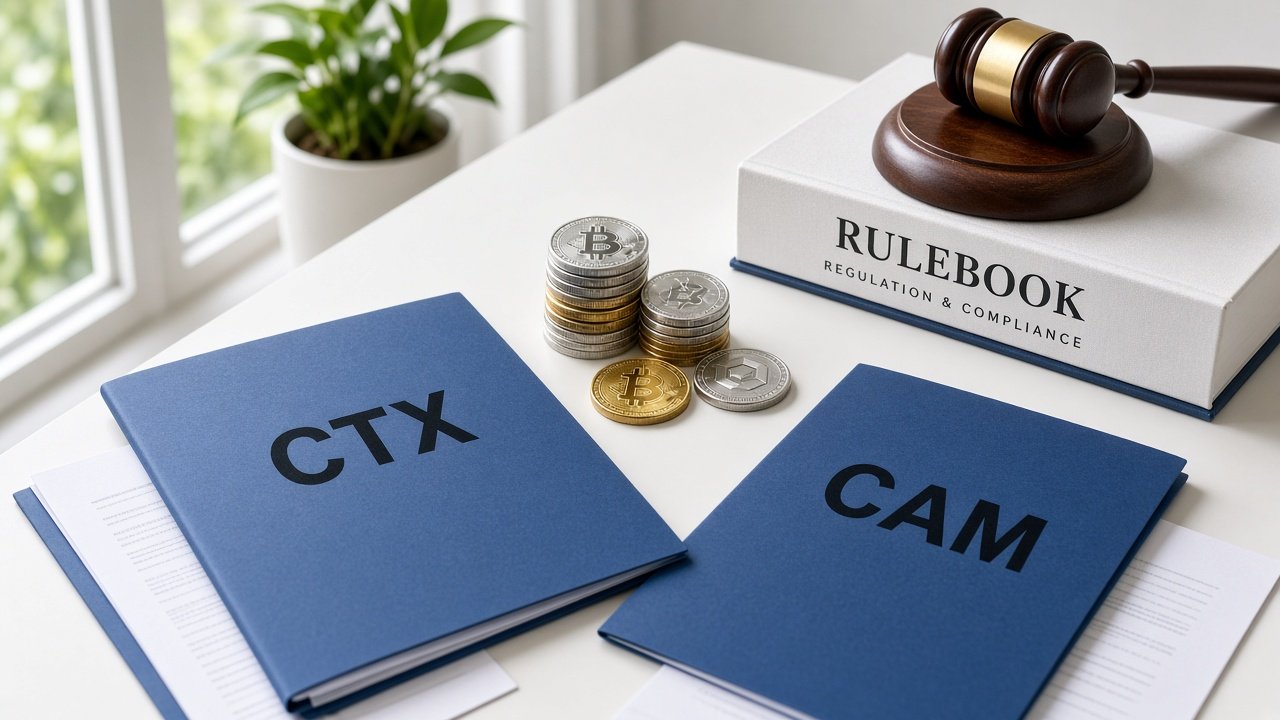
    On Monday the Commodity Futures Trading Commission published an advance notice of proposed rulemaking (ANPRM). It lays out how the agency plans to regulate retail crypto trades made on a margined, leveraged or financed basis, and a new kind of federally registered venue to host them.

    The 108-page notice has two parts. Regulation Crypto Asset Transactions (Regulation CTX) would define and govern those retail trades, which the agency calls “CTXs,” under section 2(c)(2)(D) of the Commodity Exchange Act. Regulation Crypto Asset Markets (Regulation CAM) would create the “crypto asset market,” or CAM. A CAM is a sub-category of designated contract market (DCM) built only for CTXs.

    An ANPRM is not a proposed rule. The CFTC says it will use the comments “to inform potential future agency action, such as a rulemaking.” Comments are due 60 days after the notice is published in the Federal Register. The version posted Monday still has a placeholder for that date.

    Option, not mandate

    Chairman Michael Selig stressed that the framework is voluntary. “I want to underscore that this is a federal option for crypto asset exchanges,” he said in prepared remarks at Fordham Law’s Blockchain Regulatory Symposium. He compared it to the choice banks have between a state and a federal charter. “Only Congress has the authority to mandate that all crypto asset exchanges register with the Commission.”

    He made the same point in a Wall Street Journal op-ed posted on the CFTC’s website. Unlike the stalled Clarity Act, he wrote, the rules “wouldn’t require crypto assets to trade on CFTC-registered platforms. We don’t have the authority to impose such a requirement without congressional action.”

    Selig described the market as a three-rung ladder:

    1. Ordinary spot exchanges stay mostly under state money-transmission laws, with the CFTC policing fraud and manipulation.
    2. Exchanges that offer retail customers margin, leverage or financing must register with the CFTC. This is the rung Monday’s notice covers.
    3. Exchanges that list perpetuals and other derivatives already have to register.

    Existing DCMs could add CTXs under tailored rules. Firms that only want to offer CTXs could register as a full DCM or as a CAM.

    What the rails would look like

    According to Selig and the notice, CAMs would follow the statutory DCM core principles, with rules written for crypto. Before listing a token, an exchange might weigh how it was distributed and how concentrated holdings are, lock-ups and vesting, and any programmatic issuance or buybacks.

    Retail CTXs would go through futures commission merchants (FCMs). That brings customer-fund segregation, capital requirements and Bank Secrecy Act anti-money-laundering duties. Financing could come only from an FCM or from a qualified bank sponsored by an FCM.

    Selig said the framework “contemplates a ‘proof-of-reserves’ obligation” for exchanges that hold customer assets in omnibus accounts. At this stage, the notice itself asks for comment on proof-of-reserves practices rather than setting a requirement.

    The agency also gave a preliminary reading of the statute’s 28-day “actual delivery” exception. Delivering an asset to a user’s own non-custodial wallet within 28 days would generally qualify, which keeps those trades off-exchange.

    The plan builds on a joint CFTC-SEC interpretation from earlier this year. Selig’s speech says it named bitcoin, ether, XRP, XLM and SOL, among others, as examples of digital commodities.

    The limits

    The plan does not close the spot-market gap. CoinDesk noted that for unleveraged spot trading of assets like bitcoin and ether, the CFTC’s authority still stops at fraud and manipulation.

    How long the framework lasts is another open question. CoinDesk reported that Selig has been the CFTC’s only commissioner for nearly a year. He acknowledged the limits himself: “We haven’t solved every problem, nor can agency action substitute indefinitely for a statutory framework passed by Congress, but we must do what we can.”

    Sources: CFTC press release 9307-26; CFTC ANPRM on Regulation CTX and Regulation CAM; Chairman Selig’s Fordham remarks; Selig op-ed / statement; CoinDesk


  • Community banks sue OCC to shut the crypto trust-charter door

    Community banks sue OCC to shut the crypto trust-charter door

    The Independent Community Bankers of America sued the Office of the Comptroller of the Currency on Friday, Oct. 2, in the U.S. District Court for the District of Columbia. The trade group says the OCC has stretched its power to charter national trust banks far past what the National Bank Act allows, and that crypto firms have been the main beneficiaries.

    The case is brought under the Administrative Procedure Act. It targets two documents: the OCC’s final chartering rule, issued March 2, 2026, and Interpretive Letter 1176, the earlier letter the rule codifies. ICBA argues the OCC has no authority to charter banks that are neither depository nor fiduciary, that the rule is arbitrary and capricious because the agency did not meaningfully answer comments about its risks, and that the letter should have gone through public notice and comment in the first place.

    The relief asked for is specific. ICBA wants the court to vacate the rule and IL 1176, to vacate Protego’s conditional national trust-bank approval, and to bar the OCC from relying on either document to approve future charters. Protego is the only charter the complaint asks the court to cancel outright.

    The numbers in the filing frame the fight. According to the complaint, the OCC has approved, conditionally or otherwise, 21 national trust banks during the current administration, and at least 13 of them are crypto companies. ICBA says those firms get the credibility of a federal charter without the obligations community banks carry on capital, liquidity, supervision and FDIC insurance, and that the gap puts small banks at a competitive disadvantage. The complaint also warns that the OCC’s receivership framework for uninsured institutions is untested at the scale some crypto applicants propose.

    Scope matters here. The December 2025 conditional approvals, including Ripple National Trust Bank and Circle’s First National Digital Currency Bank, are not directly challenged in the suit. They could still be affected if a court threw out the rule and the letter behind the charter path, but the complaint does not ask the court to cancel them by name.

    A lawsuit is not a revocation. No existing charter or conditional approval has been revoked or paused. The OCC told reporters it does not comment on litigation. The next steps are procedural: the agency’s response to the complaint and any scheduling order from the court.

    The GENIUS Act sits in the background. The stablecoin law made a national trust charter more valuable, because it gives a federal route to become a qualified payment stablecoin issuer, while state-qualified issuers are capped at $10 billion in outstanding stablecoins. ICBA also points to the law in its argument, saying that by legislating on stablecoins, Congress kept the broader question of crypto banking for itself.

    What happened: the largest community-bank trade group asked a federal judge to shut the trust-charter path crypto firms have been using. What has not happened: any ruling, or any change to an existing charter.

    Sources: ICBA complaint; ICBA release; CoinDesk; American Banker; OCC

  • XRP Asia opens in Seoul. The bank panel is not a new rail.

    XRP Asia opens in Seoul. The bank panel is not a new rail.

    XRP Asia made its public debut Saturday at XRP Seoul 2026. XRPL Korea hosted the session at the Grand Hyatt in Yongsan, with Ripple as the official sponsor. Sabrina Tachdjian, president of XRP Asia, spoke with Tatsuya Kohrogi, a Ripple senior manager for ecosystem growth. Edaily’s on-site report ran Saturday afternoon, Korea time.

    Tachdjian described XRP Asia as a new organization with two jobs: support the communities that already exist, and support builders and startups. She said the aim is new communities across the Asia-Pacific, not only XRPL Korea and XRPL Japan. The tools she named were developer education, hackathons, help getting to market, microgrants, and early-stage investment. She also said she wants the European XRPL Commons model adapted for Asia.

    On payments, she said that from Ripple’s point of view RLUSD is an important priority, and that wider stablecoin use would open payment use cases in Asia and elsewhere. She drew a line Ripple’s own marketing often blurs: Ripple is heavily focused on institutions, and retail and person-to-person activity is still open ground. Asked for a three-year picture, she offered three tests: builders choosing the XRP Ledger first when they move or exchange value, products that find a market, and active communities in major cities. She said thousands of people showed up on a holiday.

    A published program listed Woori Bank, Kbank, and JB Bank for a separate panel on cross-border payments and tokenized deposits. TokenPost, writing Saturday, said that listing does not establish a deployment, a pilot, or a partnership. A later recap added Kakao Bank to the speaker list and said the organizer’s own language warned that participation is not a partnership. Edaily’s account of Tachdjian’s session announced no bank integration. Attendance, if it happened, is not a rail.

    The next dated corporate mark is not in Seoul. Evernorth and Armada Acquisition Corp. II said on Oct. 1 that Armada II shareholders approved their combination on Sept. 30. They expect about $300 million in gross cash proceeds, about 473 million XRP at closing, a close on Oct. 7, and Nasdaq trading as XRPN on Oct. 8. Those dates are still subject to remaining closing conditions. Investors named in the release include Ripple, SBI, Arrington Capital, Pantera, Kraken, and GSR.

    One same-day market note put XRP near $1.48, down about 3% over the prior day, while the Seoul sessions were underway. This desk did not pull a live tape Saturday night. Nothing in the Seoul record is a price call.

    Sources: Edaily; TokenPost; Analytics Insight; PR Newswire

  • SEC Clears Listing Path for 3x Bitcoin and Ether ETPs; Trading Still Needs S-1

    SEC Clears Listing Path for 3x Bitcoin and Ether ETPs; Trading Still Needs S-1

    On October 2, 2026, the Securities and Exchange Commission approved Cboe BZX Exchange’s proposed rule change — Release No. 34-106577; File No. SR-CboeBZX-2026-065 — to list and trade six series of the VS Trust under BZX Rule 14.11(e)(4) (Commodity-Based Trust Shares): the 3x Gold, 3x Silver, 3x Bitcoin, 3x Ether, 3x Crude Oil, and 3x Natural Gas ETFs.

    Volatility Shares LLC sponsors the Trust. Each fund seeks daily investment results, before fees and expenses, equal to three times (3x) the daily performance of its reference commodity, measured through a specified portfolio of first- and second-month futures plus cash collateral. The products do not hold spot bitcoin or ether. Although each fund carries “ETF” in its name, the Commission’s order classifies them as Commodity-Based Trust Shares — exchange-traded products (ETPs), not 1940 Act investment companies.

    The rails signal is the category itself: bitcoin and ether sit in the same approval order as gold, silver, crude oil, and natural gas. Cboe filed the proposal on August 10, 2026; the Federal Register notice followed on August 19; approval came October 2 with no comments on the record.

    Listing clearance is not a trading green light. Shares cannot be offered or traded until the Trust’s Form S-1 registration statement under the Securities Act becomes effective. The order discloses no launch date. The VS Trust S-1 on EDGAR lists proposed tickers including BITH (3x Bitcoin), ETHK (3x Ether), GLDU, SLVK, OILY, and NATX.

    Product fact, not scare copy: these are daily-reset leveraged ETPs. Over periods longer than a day, path dependency means returns can diverge from a simple 3x of the reference commodity’s move. Existing broker-dealer and adviser standards of conduct still apply to recommendations of leveraged ETPs.

    What cleared on October 2 is the exchange listing path under Commodity-Based Trust Shares rules. What has not cleared is public trading. Until S-1 effectiveness, the clean read is rails permission — not a live product tape.

    Sources: SEC; Crypto Briefing; SEC

  • SEC Proposes Crypto Custody Rules for Advisers and Regulated Funds

    SEC Proposes Crypto Custody Rules for Advisers and Regulated Funds

    On October 1, 2026, the U.S. Securities and Exchange Commission proposed Adviser and Regulated Fund Custody Rules; Crypto Custody Rules — Release Nos. IA-7023 and IC-36353, File No. S7-2026-35 — to address how registered investment advisers and regulated funds may custody crypto assets that are funds or securities (or, for funds, securities or similar investments).

    Chair Paul S. Atkins said the proposal aims to “provide a clear regulatory framework for the custody of crypto assets,” closing a gap where advisers and funds have been “guessing how to effect lawful custody” under rules written for traditional assets. The release is a proposal, not a final rule: comments are due 60 days after Federal Register publication.

    Two rails changes sit at the center. First, under limited conditions, an adviser could self-custody client crypto — including for regulated-fund accounts under a parallel fund rule — when it determines in writing, initially and quarterly, that no permitted custodian is available for that asset. Guardrails described in commissioner statements and the proposing release include safeguarding expertise and systems, cybersecurity controls, annual reviews, internal-control reports, and client account-statement or equivalent disclosure requirements. Commissioner Hester M. Peirce noted the proposal’s “self-custody” label means adviser custody of client assets, not retail wallet self-custody.

    Second, the proposal would allow eligible state-chartered trust companies to serve as permitted crypto custodians if the adviser or fund has a reasonable basis, after due inquiry, that the trust company is authorized by its state banking authority to provide crypto custody and maintains written policies reasonably designed to safeguard crypto and related cash — plus review of audited financials and internal-control reports, and segregation of client assets from the trust company’s proprietary assets.

    The package also modernizes long-standing Advisers Act and Investment Company Act custody provisions and would redesignate the Advisers Act custody rule as proposed rule 223-1, with related Form ADV and Form N-CEN disclosure updates. Atkins framed the custody proposal as one piece of a broader Commission crypto stack that has included staff tokenization guidance, a tokenized-securities taxonomy, Regulation Crypto Assets offering proposals, and an Innovation Exemption for certain tokenized NMS-stock trading.

    What it is not: a statute from Congress, and not an effective compliance path until the Commission adopts final rules after comment. Until then, the clean fact is that the Commission has put a public custody blueprint on the table — with self-custody and state-trust options as the headline institutional rails.

    Sources: SEC; SEC; SEC; SEC

  • UK Banks Complete First Live Tokenised Deposit Transfers

    UK Banks Complete First Live Tokenised Deposit Transfers

    Britain’s largest retail banks have completed their first live customer transactions using tokenised sterling deposits, according to industry association UK Finance and reporting by Reuters.

    The pilots ran under UK Finance’s Great British Tokenised Deposit initiative. Participants named by UK Finance include Barclays, HSBC UK, Lloyds Banking Group, Monzo, Nationwide, NatWest and Santander. The shared platform was built by technology firm Quant.

    UK Finance said the first live set included two remortgage completions, in which deposit funds were locked and then released automatically when the property transaction completed, and a consumer marketplace payment in which programmable deposits released funds only after goods were exchanged. In the marketplace test, Reuters reported that money moved between accounts while no real goods changed hands.

    Tokenised deposits are digital representations of commercial bank money. UK Finance stresses that they are designed to keep the legal status and regulatory protections of ordinary bank deposits while adding programmability and faster conditional settlement. That distinction matters for risk-averse readers: this is not a privately issued stablecoin taking deposits off bank balance sheets. Reuters separately noted that the Bank of England has said it would rather banks experiment with tokenised deposits than with privately issued stablecoins — a preference about where innovation should sit, not a finding about today’s pilots.

    UK Finance said further pilots in coming months are meant to link tokenised customer money with digital assets for settlement, and that banks in the project plan to issue digital debt instruments that can be traded and settled with coupons paid in tokenised deposits.

    The United States is on a related path, not an identical one. In June, The Clearing House and a group of large U.S. banks announced a bank-led initiative for on-chain clearing and settlement of tokenised deposits, with links to existing RTP and CHIPS rails. That project is still building toward production; the UK pilots are the first live retail transfers of this kind the industry association has publicly claimed.

    For Hardwire readers, the story is infrastructure, not a price signal. Regulated banks moved programmable sterling that remains commercial bank money. Scaling, rulebooks, and digital-asset settlement pilots still sit ahead of any claim that tokenised deposits have replaced either cash rails or dollar stablecoins.

    Sources: UK Finance · Reuters · The Clearing House

  • Bitcoin Tops $85,000 as ETF Flows Return — With a Caveat on U.S. Spot Demand

    Bitcoin Tops $85,000 as ETF Flows Return — With a Caveat on U.S. Spot Demand

    By Westen · Policy & Markets · Sep 21, 2026Bitcoin traded above $85,000 on Monday for the first time since late January, extending a rebound that absorbed last week’s failed Senate vote on crypto market-structure legislation and the Federal Reserve’s first rate hike since 2023.

    What movedCointelegraph, citing TradingView, reported an intraday print near $85,248, with Sunday’s weekly close at $81,120 — the highest weekly close since early May. The move pushed price through levels that had capped the market near $82,000–$83,000 through the weekend.Derivatives amplified the tape. Coverage citing CoinGlass put short liquidations in the hundreds of millions of dollars as price broke higher; one Bitcoin.com Markets report timed more than $260 million in bitcoin short liquidations within about an hour as BTC cleared $84,000. Cross-crypto liquidation totals reported elsewhere topped $600 million over 24 hours. Those figures describe forced buying in futures, not necessarily new long-term spot buyers.

    Flows: Friday’s bid, mixed weekInstitutional ETF activity was the cleaner bullish datapoint into the weekend. Farside Investors data, cited by Cointelegraph and Blockhead, showed roughly $433–$435 million of net inflows into U.S. spot bitcoin ETFs on Friday, Sept. 18 — the largest single-day haul since early September, with reports noting no product printed outflows that day.Context matters. Midweek flows after the CLARITY Act cloture failure and the Fed decision included large outflows (Blockhead cited about $450 million out on Sept. 15 and $296 million out on Sept. 16). CryptoQuant noted a shift in flow leadership: Fidelity’s FBTC took a larger share of Friday’s inflows than BlackRock’s IBIT, reversing the usual pattern.Glassnode data cited by Cointelegraph puts the aggregate cost basis for U.S. spot bitcoin ETF holders near $85,638 — so Monday’s print brings the cohort close to breakeven on paper, not yet clear of it.

    The U.S. spot caveatCryptoQuant’s Coinbase Premium Index — the gap between Coinbase (USD) and Binance (USDT) prices — was reported back near −0.02 as BTC traded near the highs. A sustained positive premium is the confirmation many U.S.-focused desks still want. A negative premium during a rally does not prove the move is “fake”; it does suggest dollar-based U.S. spot demand has not fully confirmed the squeeze.Policy backdrop markets already pricedOn Sept. 15, Senate cloture on the Digital Asset Market CLARITY Act failed 50–49, short of the 60 votes needed. Two days later, agencies moved under existing authority:• The CFTC filed crypto market-structure rulemaking with OIRA (RIN 3038-AF80, received Sept. 17) — a prerule stage that still requires agency votes and public comment before enforceable rules.• The SEC issued a five-year Innovation Exemption for qualifying venues to trade certain issuer-backed tokenized U.S. stocks onchain without registering as exchanges; synthetics that do not convey ownership rights are excluded. Issuers get notice and can object.• The Fed raised the federal funds target range 25 bps to 3.75%–4.00% on Sept. 16 — its first hike since July 2023.

    Bitcoin sold off into the vote and hike, then recovered. That sequence is consistent with “bad news priced, agency path treated as substitute clarity” — not with Congress having delivered a statute.What to watch this week• Whether BTC can hold weekly closes above the reclaimed longer-term moving averages and clear the prior local high zone near $83,000–$86,000 without only leverage doing the work.• Coinbase premium returning to sustained positive territory.• CME FedWatch odds (reported near ~53% for another 25 bp hike in October as of Monday).• OIRA review of the CFTC package and the SEC’s open Regulation Crypto Assets comment window (through Oct. 20).Bottom line: The $85,000 print is real on the tape. The confirmation still missing is cleaner U.S. spot demand and durable policy that survives beyond a temporary exemption and a prerule filing.

    Sources: Cointelegraph · Blockhead · Bitcoin.com · Unchained · CoinDesk

  • After CLARITY stalls, SEC and CFTC move under existing authority

    After CLARITY stalls, SEC and CFTC move under existing authority

    Washington’s digital-asset week ended without a new market-structure law—and with two agency steps that matter more for process than for finished rules.

    On Sept. 15, the Senate rejected cloture on the motion to proceed to H.R. 3633, the Digital Asset Market Clarity Act, by a recorded vote of 49–50, with one senator not voting. Cloture required three-fifths of the Senate. The measure, which would allocate roles between the Securities and Exchange Commission and the Commodity Futures Trading Commission over digital commodities and related market structure, did not advance to debate on its substance. Senate floor records show a motion to reconsider was entered; the recorded cloture outcome remained rejected.

    Two days later, the SEC issued what it calls an “Innovation Exemption”: temporary, conditional relief so certain Tokenized Securities Venues can trade tokenized National Market System stock using permissioned automated market-maker liquidity pools without registering as exchanges, plus limited dealer-definition relief for qualifying proprietary liquidity providers. In Press Release 2026-90 and the related Exchange Act order, the Commission framed the package as a five-year bridge while it considers further action, and it requested public comment. Conditions described by the agency include equivalent shareholder rights (not synthetic tokens), issuer notice and objection rights, disclosure and volume constraints, and trading-halt coordination. Antifraud provisions continue to apply. The relief is time-limited and narrow; it is not a substitute for statute.

    The same day, Sept. 17, the Office of Information and Regulatory Affairs listed a CFTC submission, RIN 3038-AF80—“Regulation Crypto Asset Transactions and Regulation Crypto Asset Markets”—as received for Executive Order 12866 review at the prerule stage. The public OIRA entry shows pending review, no legal deadline, and a designation that the action is not economically significant under the EO criteria. A prerule in White House review is an early step. It is not a proposed rule in the Federal Register, and it does not by itself create new compliance obligations. Scope details—which assets, venues, or intermediaries would be covered—were not disclosed on the public review page as of this writing.

    For risk-focused market participants, the sequence is clearer than the end state: Congress did not clear a 60-vote procedural bar on market-structure legislation, while the SEC used existing exemptive authority for a bounded tokenization experiment and the CFTC placed an early crypto-markets package into OIRA’s queue. What comes next is documentary—proposed text, comment periods, and any further Senate action on reconsideration—not a finished statutory map.

    Sources: U.S. Senate · SEC · Office of Information and Regulatory Affairs · Federal Register