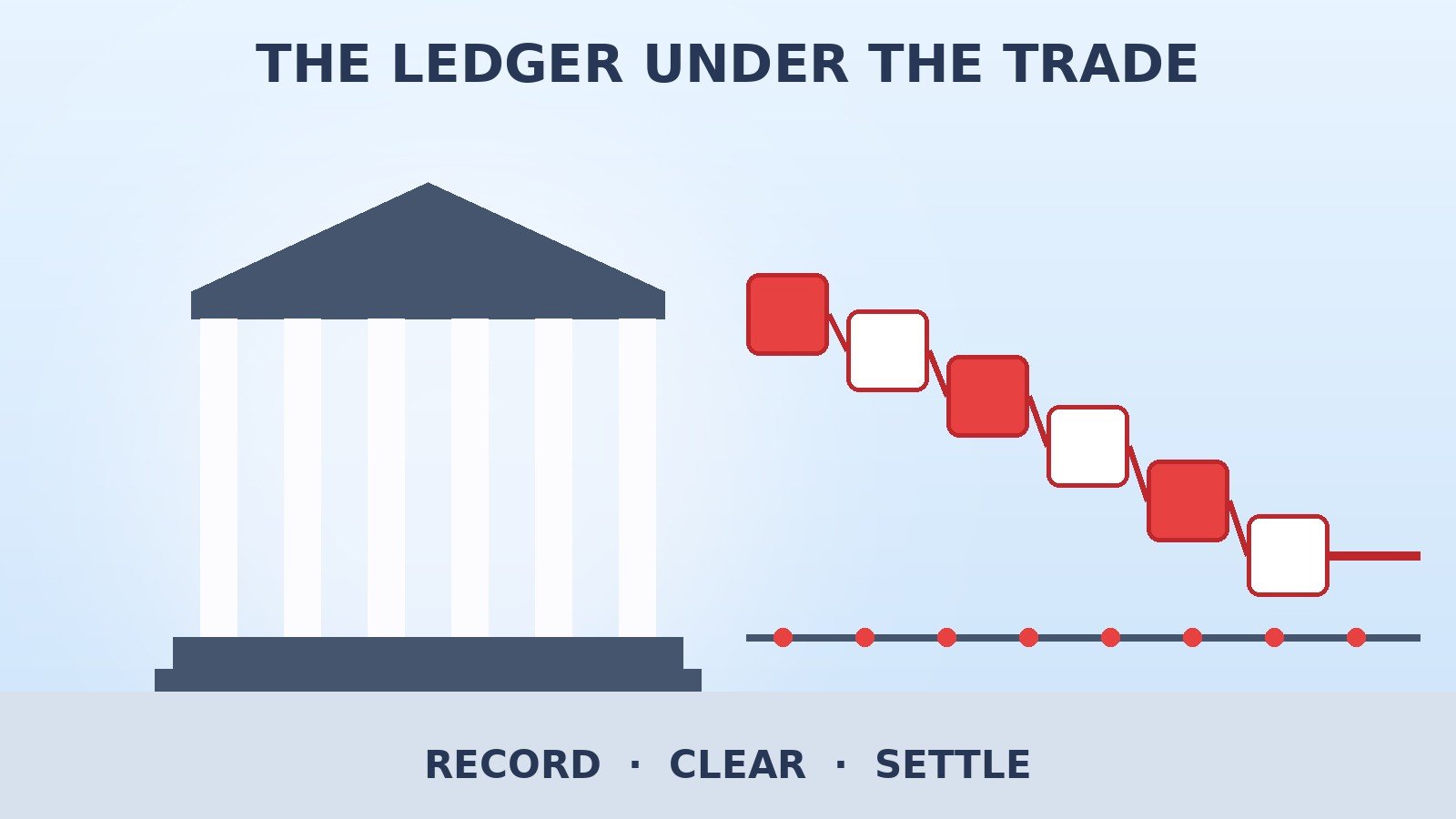
The New York Stock Exchange has chosen Avalanche technology to record and settle trades on its planned tokenized securities venue, moving one of Wall Street’s oldest institutions a step closer to running core market plumbing on a blockchain.
Ava Labs, the company behind Avalanche, said Monday that Avalanche will provide the core ledger technology to the clearing firm supporting an NYSE-affiliated alternative trading system. Subject to regulatory approval, the platform is designed for 24/7 trading, clearing and settlement for its subscribers.
The choice is narrower than “NYSE moves to a public blockchain.” Ava Labs chief business officer John Nahas told CoinDesk the exchange will run its own custom chain built on Avalanche technology, tailored to its regulatory needs, rather than settling on Avalanche’s public network. NYSE also said the venue will support equities issued on a range of blockchains, with the Avalanche-based ledger handling the record of trades.
“The ledger that records and settles trades needs to be fast and reliable, let us control who can take part, keep costs predictable, and have a large community of developers behind it,” said Dennis Lee, NYSE’s head of digital issuance, in the release.
The venue itself is not new. NYSE, part of Intercontinental Exchange, announced the project in January, describing 24/7 operations, instant settlement, dollar-sized orders and stablecoin-based funding, built on NYSE’s Pillar matching engine with blockchain-based post-trade systems. ICE said tokenized shareholders would receive the same dividends and governance rights as traditional ones, and that it is working with BNY and Citi on tokenized deposits across its clearinghouses.
What it does not mean yet
- No regulator has approved the venue. Neither ICE nor Ava Labs has given a launch date.
- A permissioned chain controlled by the exchange is not the same as demand for the public Avalanche network. No fee or token arrangement has been disclosed.
- NYSE is not alone. Nasdaq and DTCC are building their own tokenization infrastructure, CoinDesk reported.
The broader market had its own test. October consumer prices rose 0.4% from September, and prices excluding food and energy rose 0.3%, the Bureau of Labor Statistics said Tuesday, each a tenth of a point above the forecasts of economists polled by Dow Jones. BLS did not publish 12-month rates for most series because it could not collect October 2025 data during the government shutdown. Bitcoin traded around $74,000 after the report, after U.S. spot bitcoin ETFs lost another $201 million Monday, according to Farside Investors.
For cautious readers, the signal is about who is building the rails, not about any single token. The key milestone to watch is regulatory approval, not price.
Sources: Ava Labs, Avalanche Foundation, Intercontinental Exchange, CoinDesk, CoinDesk (markets), Farside Investors, Bureau of Labor Statistics.