Big banks just did something crypto people have bragged about for years. They made dollars move on a Saturday. Just not your dollars.
What launched
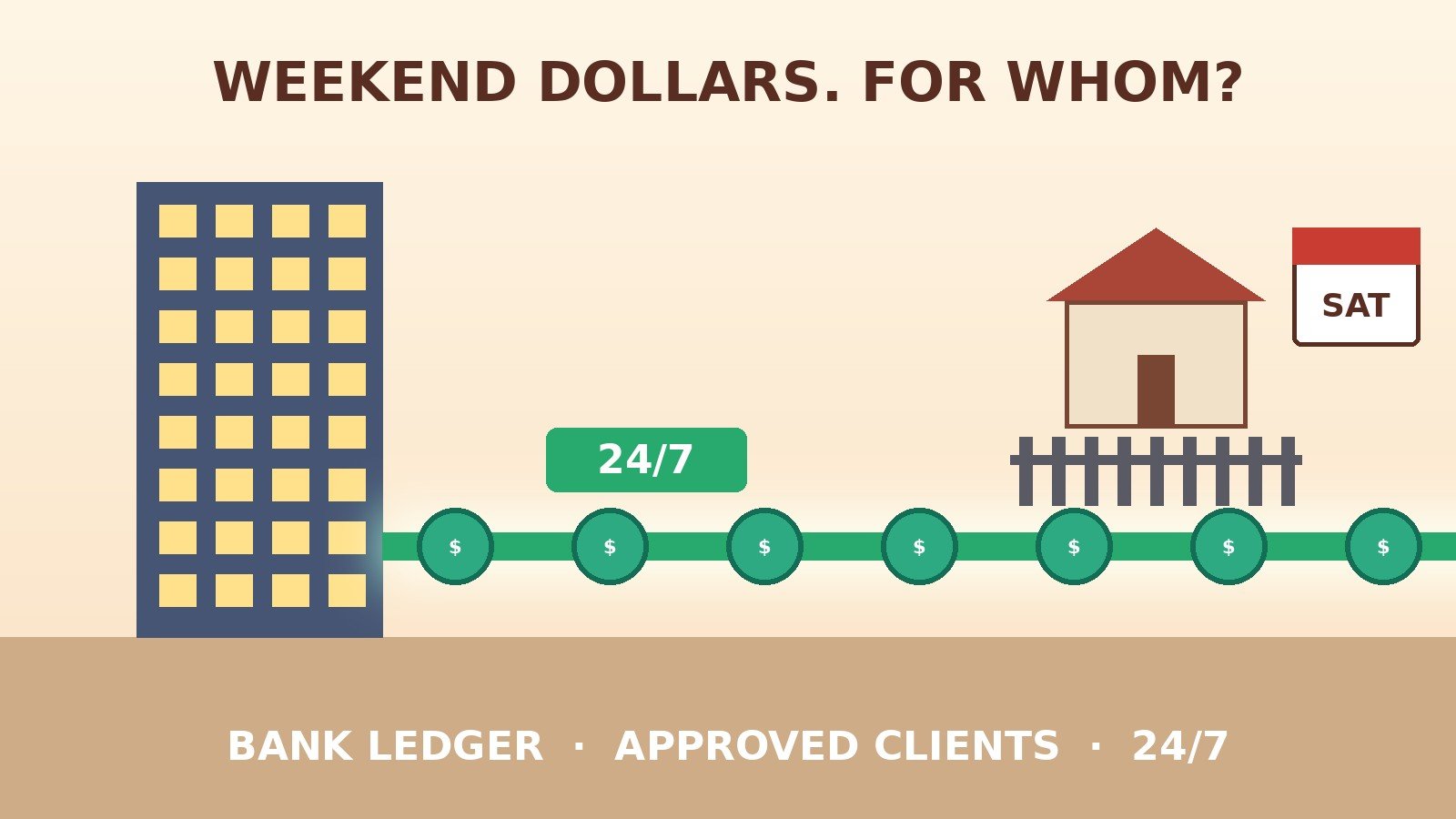
On Monday, Singapore’s DBS and Kinexys by J.P. Morgan switched on a link between their blockchain deposit networks. Approved institutions can now send tokenized U.S. dollar deposits between Singapore and the United States at any hour, weekends included. Ant International, the payments giant, is the first client. Partior, a settlement network the two banks helped found, handles the matching. DBS says it is live and commercially ready, not a pilot.
Read the footnote, though. Moving money between a regular bank account and the blockchain account still goes dark for three hours every Saturday, 3 to 6 p.m. ET. DBS says a fix is in the works.
The fair point
This is real progress. Treasurers at global companies have waited on bank cut-off times and holidays forever. Money that settles in minutes instead of days is good for business, and these are deposits at two of the safest banks in the world. That’s more than many stablecoins can say.
Who gets the fast lane
But look at who it’s for. “Institutions.” “Corporate treasurers.” A multinational payments firm. If you’re a small business owner or a family sending money home, nothing changed this morning. You still wait for Monday.
And notice what this isn’t. These aren’t stablecoins anyone can hold, and this isn’t a public blockchain. It’s a private ledger run by the bank, for the bank’s approved customers. The bank decides who gets in, and like any bank account, it can be frozen. That’s the old system with faster pipes.
My speculation
Here’s where I go further, and I’m labeling it. I think tokenized deposits are the banks’ answer to stablecoins, built to keep the always-on dollar inside their walls. If the biggest companies get 24/7 dollars from their bank, they have less reason to touch an open stablecoin that a regular person can also use. And once regulators see “safe” bank tokens working, it gets easier to argue that open alternatives are the risky ones. Nobody has said that out loud. Watch for it in the next round of stablecoin rules.
Crypto has its own version of this problem. This morning Arbitrum holders were voting on whether to return frozen hack funds to Binance, coins its Security Council moved without the owner’s key. Bank chain or “decentralized” chain, somebody is holding the off switch. The question is whether you know who.
So yes, cheer the weekend dollar. Then ask the next question: when does it come to the rest of us, and on whose terms?
Sources: DBS, The Block, CoinDesk, Hardwire (Nov. 14), Hardwire (Nov. 11).